

United Nations, June 13 (AP) — UN member nations voted overwhelmingly Thursday to demand an immediate ceasefire in Gaza, the release of all hostages held by Hamas, and unrestricted access for the delivery of desperately needed food to 2 million Palestinians.
The vote in the 193-member General Assembly was 149-12 with 19 abstentions. It was adopted with a burst of applause. The resolution, introduced by Spain after a similar Security Council text was earlier vetoed by the United States.
Those voting against included the US, Israel, Argentina, Hungary, and Paraguay. India abstained along with Ecuador, Romania, and Czechia.
The United States and close ally Israel opposed the resolution, along with Argentina, Hungary, Paraguay, Papua New Guinea and six Pacific island nations.
The resolution “strongly condemns any use of starvation of civilians as a method of warfare.”
Israel’s U.N. Ambassador Danny Danon spoke vehemently against the resolution, especially for failing to condemn Hamas for its attack in southern Israel on Oct. 7, 2023, which triggered the war in Gaza.
He denied that Israel was using starvation as a weapon of war, calling the accusation a “blood libel,” and insisted that aid is being delivered.
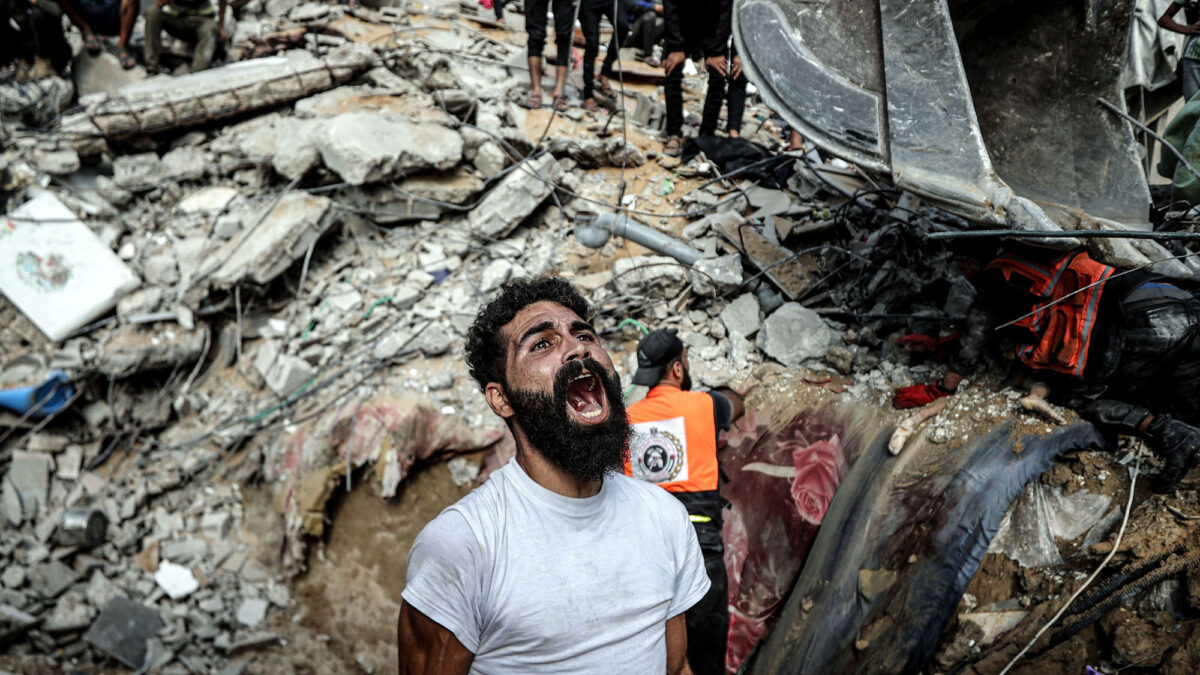
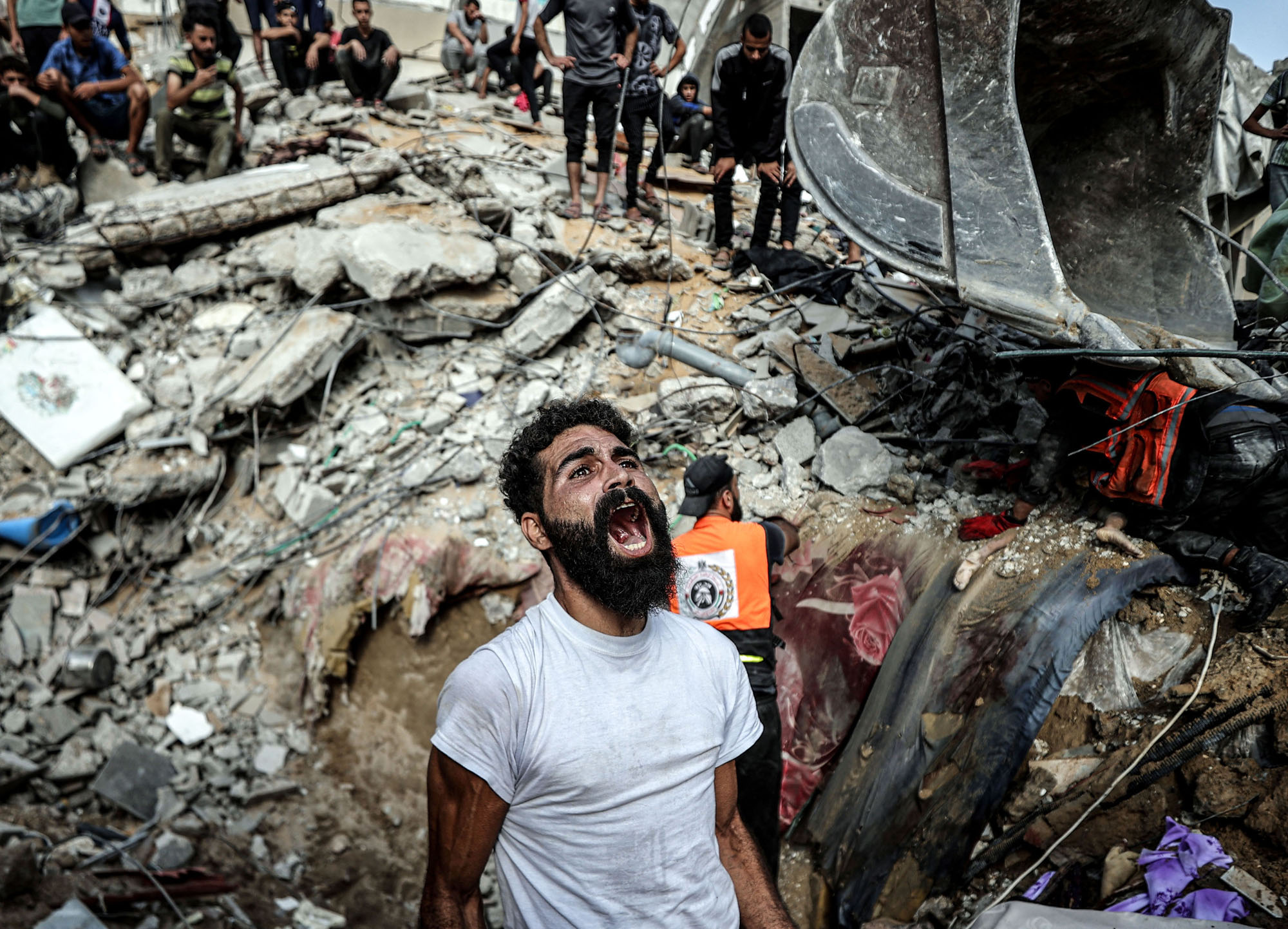
Experts and human rights workers say hunger is widespread in Gaza and some 2 million Palestinians are at risk of famine if Israel does not fully lift its blockade and halt its military campaign, which it renewed in March after ending a ceasefire with Hamas.
The Palestinian U.N. ambassador, Riyad Mansour, pleaded with U.N. members to approve the resolution. “The actions you take today to stop the killing, displacement and the famine will determine how many more Palestinian children die a horrible death,” he said.
General Assembly President Philemon Yang said in opening Thursday’s meeting that the world body once again was being called on to address “the unacceptable and catastrophic situation in Gaza” because the Security Council is paralyzed and unable to fulfil its responsibility for maintaining international peace and security.
There are no vetoes in the assembly. But unlike in the Security Council, its resolutions are not legally binding, though they are seen as a barometer of world opinion.
After a 10-week blockade that barred all aid to Gaza, Israel is allowing the United Nations to deliver a trickle of food assistance and is backing a newly created US aid group, which has opened several sites in the center and south of the territory to deliver food parcels.
But the aid system rolled out last month by the Gaza Humanitarian Foundation has been troubled by near-daily shootings as crowds make their way to aid sites, while the longstanding U.N.-run system has struggled to deliver food because of Israeli restrictions and a breakdown of law and order.
Like the failed Security Council resolution, the resolution passed Thursday does not condemn Hamas’ attack or say the militant group must disarm and withdraw from Gaza. Both are U.S. demands.
Acting U.S. Ambassador Dorothy Shea reiterated those demands before Thursday’s vote and said the resolution “sends an unacceptable message to Hamas and other Iran-backed terrorist proxies, and that message is, you will be rewarded for taking hostages, diverting aid and launching attacks from civilian areas.”
The resolution references a March 28 legally binding order by the top United Nations court for Israel to open more land crossings into Gaza for food and other supplies. The International Court of Justice issued the order in a case brought by South Africa accusing Israel of acts of genocide, charges Israel strongly denies.
It stresses that Israel, as an occupying power, has an obligation under international law to ensure that humanitarian aid reaches those in need.
The resolution reiterates the assembly’s commitment to a two-state solution to the Israeli-Palestinian conflict, with the Gaza Strip as part of a Palestinian state.
The assembly is holding a high-level meeting next week to push for a two-state solution, which Israel has rejected.
It supports mediation efforts by Egypt, Qatar and the United States aimed at implementing a January ceasefire agreement.
India’s Decision
India explained its abstention by stating that it was consistent with its previous voting record on similar resolutions. It cited its position on the 2022 General Assembly resolution requesting an International Court of Justice advisory opinion on Israel’s occupation of Palestine, and another in 2024 calling for ICJ to opine on Israel’s obligations to UN and other international organisations.
India’s permanent representative to the UN, Ambassador P. Harish, said the country was deeply concerned about the worsening humanitarian crisis and condemned the loss of civilian lives. “India has always been on the side of peace and humanity,” he said.
Harish called for the protection of civilians, adherence to humanitarian obligations, and timely delivery of aid to Gaza. “We also believe that release of remaining hostages and a ceasefire are important to ameliorate the humanitarian situation in Gaza. Our collective voice should echo this,” he said. However, he stressed that “dialogue and diplomacy” remained the only path to peace, and that “continuing argumentation and accusations hinder the path to peace.”
“India had earlier abstained in the vote on Resolutions A/RES/77/247 and A/RES/79/232. Our vote today is in continuation of this, in the belief that there is no other way to resolve conflicts, but through dialogue and diplomacy. Our joint effort should be directed towards bringing the two sides closer. For these reasons, we abstain on this resolution,” he said.
According to The Wire, while India cited these two earlier abstentions to justify its voting position, the June 12 resolution is focused primarily on demanding a ceasefire in Gaza.
Just six months ago, India had voted in favour of a separate General Assembly resolution on December 11, 2024 that also called for a ceasefire, underlining that its approach to voting on Gaza-related resolutions has not been uniform. In fact, the first time that it voted for a ceasefire in Gaza was in December 2023.
On the ICJ argument that is implicit in India’s explanation of vote, it should be noted that India had voted ‘yes’ in a separate December 3 resolution supporting a UN-led international conference on a two-state solution. The two resolutions of December 11 and December 3, of which India voted in favour, also referenced the ICJ’s advisory opinion of July 2024 that Israel’s occupation of Palestinian territories was illegal under international law.
In both cases, the ICJ references appeared in the preambular sections, as they did in the June 12 resolution.
It remains unclear, therefore, why India considered the mention of the ICJ’s advisory opinion in the latest resolution a reason to abstain, particularly as it was limited to preambular language, The Wire pointed out.
Moreover, India has consistently supported the ICJ, in contrast to its position on the International Criminal Court, which it has not joined.
An Indian judge currently sits on the ICJ bench, and New Delhi had itself successfully turned to the world court to secure consular access for Indian national Kulbhushan Jadhav, who was accused of espionage by Pakistan, The Wire said.
India also asserted that the international community should help create conditions for the early resumption of direct peace talks. “We hope this August assembly will send a clear message to expand the prospect for dialogue and diplomacy towards restoration of peace and bringing the humanitarian crisis in Gaza to an end,” Harish said.
The Indian representative also restated support for a two-state solution, which would lead to “the establishment of a sovereign, independent and viable State of Palestine, living within secure and recognized borders, side by side, in peace with Israel.”
The strong support for the resolution marked a shift among European nations, many of which had previously abstained on Gaza-related votes. Only Hungary opposed the resolution from the continent, while Romania, Albania, Bulgaria, Georgia, North Macedonia, Slovakia and Czechia abstained.
Among the five permanent members of the Security Council, all except the United States voted in favour. That included the United Kingdom, a key US ally. Australia and Japan, both members of the Quad, also voted for the resolution, diverging from Washington’s position.
Overall in the global south, the ‘no’ votes were only from six Pacific Island nations, Papua New Guinea, Paraguay and Argentina. In Asia, all countries, except for India and Timor-Leste, voted for the UNGA resolution, starkly demonstrating New Delhi’s outlier voting, The Wire said.
There were three abstentions in South and Central America and six in Africa.
END
