


By P.K.Balachandran/Daily Mirror
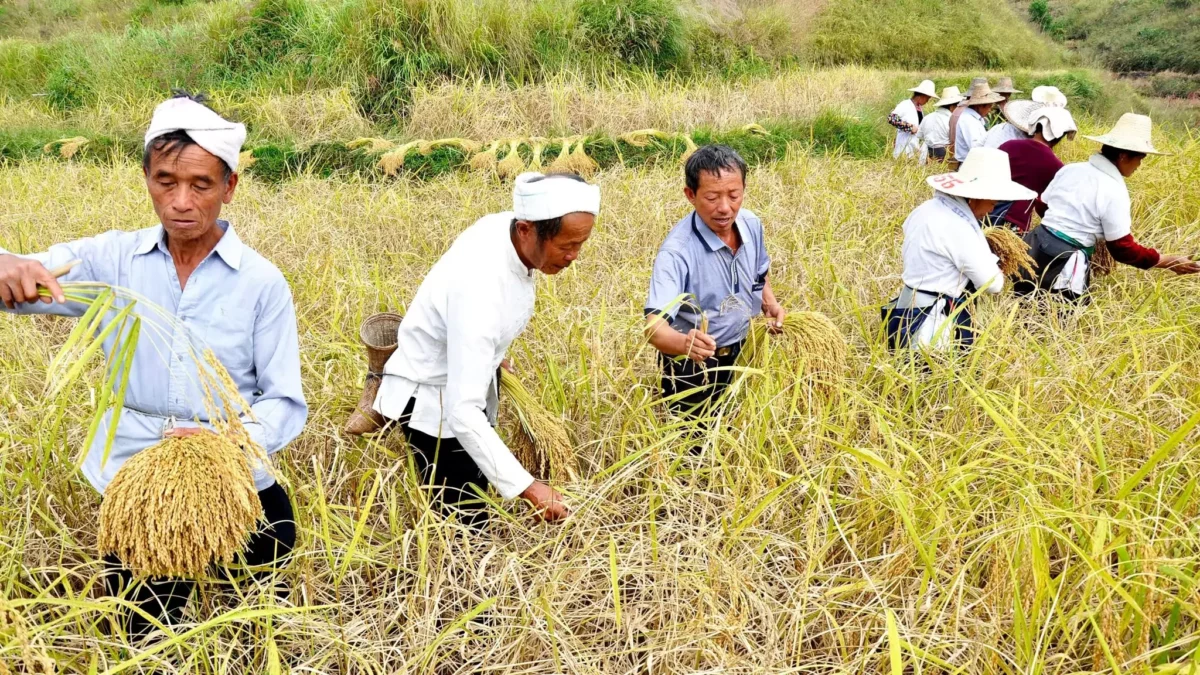
Colombo, June 3- Despite the negative impact of COVID-19, the government of China announced in 2020 that it had eradicated “extreme rural poverty” by lifting 800 million out of it.In 1981, 97% of China’s rural population lived in extreme poverty with an income below $1.90/day, as per 2011 Purchasing Power Parity. By 2020, this had dropped dramatically to being below 1%, with official claims of near-zero extreme poverty by 2021.
According to the International Labour Organization (ILO), by 2025, trends suggest it will remain below 1%, with fewer than 10 million people still in extreme poverty. But at the World Bank’s $6.85/day (2017 PPP) threshold, approximately 10-13% of the rural population (around 100-130 million people) may still be considered “poor” as of 2025 projections.
Urban Poverty
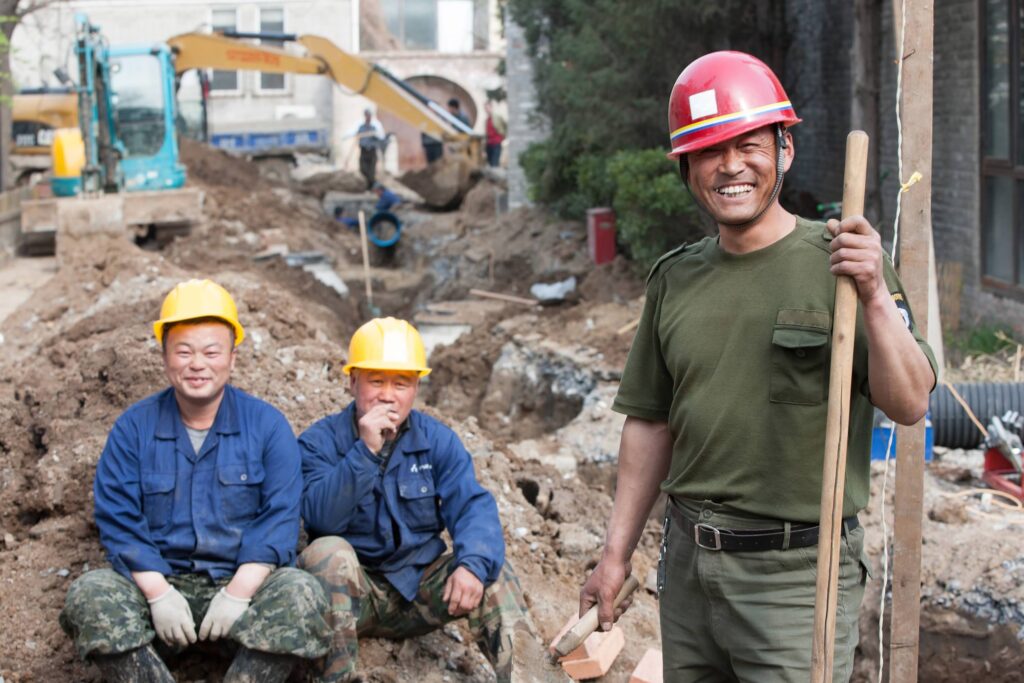
In 1981, over 70% of urban residents lived below the $1.90/day poverty line. By 2020, this was also below 1%. There is no official national urban poverty line, but using the World Bank’s $1.90/day standard, the urban poverty rate was below 0.5% in 2018.
Urban poverty is less severe than rural poverty but is complicated by higher living costs and the marginalisation of migrant workers, who often lack access to urban social services.
Prof. Robert Walker and Dr. Yang Lichao say in their paper written for the ILO that these outcomes, which had been the result of a sustained, well-thought-out process, were “an achievement without global precedent.”
The Process
China’s poverty reduction strategy has evolved significantly since the 1978 economic reforms, with a focus on both rural and urban areas. Post-1978 reforms boosted agricultural productivity, releasing surplus labour to higher-paying non-farm sectors. This was critical in reducing rural poverty in the 1980s and 1990s.
Rapid industrialisation created jobs in manufacturing and services, absorbing rural migrant workers. Urbanisation provided remittances and markets for rural produce. From 1992 to 2023, the secondary sector’s (industry’s) contribution to the GDP rose from 22% to 38%. Massive investments in rural roads, irrigation, and internet connectivity linked farmers to markets, boosting incomes.
High Investment
Over $2.2 trillion was invested in poverty alleviation, including $252 billion in direct funding and $1.4 trillion in loans (including microcredit for women). More than 3 million Communist Party officials were deployed to rural areas. Millions were moved from remote villages to new urban or peri-urban settlements to improve access to jobs and services, though this involved forced or involuntary displacement.
The Dibao Program (the Minimum Living Guarantee System) expanded to rural areas in 2007, providing cash transfers to 6.2% of the rural population (19 million people) as of 2021. Over 99.9% of the poor got basic medical insurance, with 118,000 health workers deployed and 3,700 new facilities built.
Education investments included new schools and teacher training, reducing rural “education poverty” from 15.4% in 2011 to 9.4% in 2015.
Rural pensions have expanded since the 2000s to support ageing rural populations, allowing farmers to retire and transfer land to more efficient operators. The Rural Revitalisation Strategy promotes modern farming technologies, improves property rights, and upgrades rural infrastructure to boost productivity and incomes. In 2021, 31.45 million rural residents found jobs through these efforts.
Change to Relative Poverty
After 2020, China moved from “extreme rural poverty” to measuring “relative poverty” in urban and rural areas.
Prof Walker and Dr. Yang describe “Relative poverty” as “circumstances in which people cannot afford to actively participate in society and benefit from the activities and experiences that most people with some means take for granted.”
As societies become more prosperous, poverty ceases to be primarily about hunger, destitution, and survival, and more about whether people can afford to partake in the normal activities of daily life that are enjoyed by most people.
Comparison, therefore shifts from “point-of-death impoverishment” to “average living standards.” The underlying logic is that the nature of poverty changes as national wealth and living standards rise. In adopting a “relative poverty” standard, which most high-income countries have done, attention is directed to social norms regarding acceptable living standards, to the benefits of citizenship and to the degree of deprivation that can be tolerated in a stable and caring society.
Relative poverty is conditioned by aspirations and social expectations emanating from culture and the level of economic activity. Poverty thus becomes a relative concept, hence the term “relative poverty”.
China had devised separate poverty thresholds for rural and urban societies as well as for provinces. This was because economic and social conditions varied from province to province and between rural and urban areas.
Relative Poverty Is Persistent
As compared to extreme rural poverty, relative poverty is more persistent because the notion of poverty varies over time and from place to place as the society and economy change and there is migration from one place to another.
A living standard which seemed adequate in 1990, may not seem so in 2025 or if one had moved from a small town to a big city. And such a movement, involving millions of people, takes place every now and then.
The notion of poverty could also change when a person sees some sections of society advancing and he is lagging behind relatively speaking. The State has to be cognizant of this and take steps to narrow the gap, as this might fuel unrest.
The Sustainable Development Goals (SDGs) set for 2030 have now become the foci for governments across the world, and China is no exception. Notions of poverty will change as the population becomes aware of the SDGs and governments begin to act on them.
The Communique of the Fourth Plenary Session of the 19th Central Committee of the Communist Party of China, issued in October 2019, proposed addressing relative poverty and committed to improving social assistance. It pledged to provide higher quality employment, education with life-long learning, health guarantees and comprehensive social security.
The State Council announced that the scope of unemployment insurance would be expanded and that social assistance would be made available to “out-of-work” migrant workers without unemployment insurance.
Challenges
The high cost of poverty alleviation raises concerns about financial sustainability, with some subsidies potentially creating dependency, Western observers pointed out. Urban-rural income gaps persist (urban incomes are nearly three times rural), and regional disparities (e.g., Eastern vs. Western China) remain significant.
The Hukou system limits migrants’ access to urban services, contributing to transient urban poverty. The Hukou system is a means of population registration, not unlike a census. An individual’s Hukou can be either urban or rural. A person’s Hukou is attached to a city or local municipality and determines where they have access to social services like hospitals and schools. Therefore, the Hukou system limits rural migrants’ access to urban services, contributing to urban poverty. But it is possible to convert Hukou status from urban to rural and vice versa.
Reliability of Statistics
Western observers say that official poverty figures may understate it and some criticise the low poverty line ($2.30/day) as outdated for an upper-middle-income country.
Some rural relocations have been criticised for limiting individual choice, potentially disrupting livelihoods.
China has made historic progress in reducing extreme poverty, particularly in rural areas, through sustained economic growth, targeted interventions, and robust social policies. While extreme rural poverty has been nearly eliminated under the national standard, urban poverty and relative poverty are increasing as a result of economic and cultural developments, and sometimes due to policy errors also.
END
