
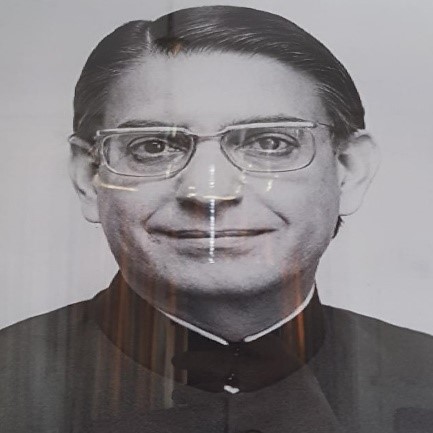

By Tang Lu
Introduction
In April 2025, India-Pakistan relations were once again strained by terrorist attacks. The Kashmir issue has always been at the heart of the relationship. This article recounts a little-known episode of secret diplomacy in 1999: the secret talks between former Pakistani Foreign Secretary Niaz Naik and Indian envoys to break the impasse over Kashmir, and the ensuing clashes in Kargil. This history reveals the complexity of Indo-Pakistani relations: while both sides have the will to resolve their differences through dialogue, they are often constrained by multiple factors such as domestic political pressure, military attitudes, and national sentiments. Even strong Indian leaders like Vajpayee have had difficulty breaking through these constraints. This also explains why to this day, India and Pakistan are still difficult to get out of the circle of hostility and mutual suspicion. Through the lens of Naik’s personal experience, the article shows in detail the twists and turns of high-level diplomatic negotiations between India and Pakistan. This episode not only has historical value but is also very inspiring to the understanding of the current India-Pakistan relations and thinking about the possible path to resolve the Kashmir dispute. It reminds us that the road to reconciliation between India and Pakistan requires political wisdom on both sides and even more time and patience.
On March 27, 1999, a small hotel in New Delhi was inhabited by an undersized, but elegant, visitor. In the eyes of the hotel’s manager, this guest’s behavior was unusual: he never left the house, and all his meals were served in his room; although he had a long list of guests, there was only one actual visitor – Indian R. K. Mishra. Until he left on April 1, he only went downstairs once, just to buy a tourist map.
This mysterious guest was Pakistan’s former foreign secretary, India, and Pakistan’s “back door” diplomatic negotiations on the Pakistani side of the chief representative Niaz Naik. Commissioned by Pakistani Prime Minister Sharif, Naik’s mission was to carry out the most meaningful negotiations in the history of India and Pakistan with Indian special envoy R. K. Mishra on the issue of Kashmir. The driving force behind all this was Prime Ministers Sharif and Vajpayee.
I had the privilege of meeting and had several interactions with the veteran diplomat in Kathmandu in September 2000 while attending an international workshop on technology, defense, and cooperative security in South Asia. Mr. Naik was a personal friend of the Bhutto family, Zia-ul-Haq, and Sharif and Vajpayee, and had served as ambassador in many countries. In the parlor known as the “Pakistan Corner”, the hale and hearty Naik, who has an excellent memory, recounted in detail his personal involvement in the diplomatic maneuvering between India and Pakistan, from the Lahore summit to the Kargil conflict.
As a Punjabi refugee who moved to Pakistan during the partition of India and Pakistan, Naik has devoted a great deal of effort to improving India-Pakistan relations.
During Zia-ul-Haq’s rule, he facilitated the signing of several agreements between the two countries in the areas of bilateral trade, visas, defense, etc., in his capacity as Foreign Secretary and Pakistan’s top representative in India. For more than a decade after Zia-ul-Haq’s mysterious death, Naik played an important role in maintaining ties between the two countries through “track two” diplomacy, despite Pakistan’s closure of all border gates with India, and in 1997, Nawaz Sharif, an advocate of better relations with India, was elected Prime Minister of Pakistan by a landslide.
Although Sharif and the brilliant Naik differed on several issues, they were highly aligned on improving India-Pakistan relations. In Naik’s view, Sharif is not only a politician, but also a businessman, “who sees the potential benefits of Indo-Pakistani cooperation in the economic and social spheres, and is genuinely interested in advancing relations between the two countries.”
Covering the ears of the formulation of the program of India and Pakistan Prime Minister century ambition
February 20, 1999, Indian Prime Minister Vajpayee in a bus across the Wagah border into Pakistan, and the long-awaited Pakistani Prime Minister Sharif embraced, the leaders of the two countries finally breaking the nearly a decade of “old and dead” stalemate. In the subsequent Lahore summit talks, the two sides not only reduced the risk of missile misfires, established the summit hotline, discussed the Kashmir dispute and other topics agreed upon, but also jointly signed the Lahore Declaration.
However, soon after the end of the talks, the two countries were full of domestic skepticism. The public believes that this “bus diplomacy” does not show hope for the resolution of the Kashmir issue.
Amidst heated debates on whether Kashmir was a permanent impasse, Prime Ministers Sharif and Vajpayee, eschewing their advisors and the Foreign Office, ventured into the thorniest of all Indo-Pakistani issues, Kashmir. The two prime ministers agreed on three issues: first, that the status quo in Kashmir was inappropriate and had to be resolved; second, that the two sides had to resolve the issue by the year 2000; and, third, that any preliminary talks had to be conducted discreetly through “backdoor” diplomacy. Referring to the Palestinian-Israeli negotiations in Oslo, the two sides agreed to send their own special envoys to conduct face-to-face negotiations on Kashmir.
At the end of February, Naik, who was retired, received a phone call from Sharif: “Naik, I’m going to send you on an important mission. Now that the world has changed dramatically, why are Pakistan and India in the South Asian subcontinent still entangled in historical feuds? Let us find a solution to the Kashmir issue and try to give South Asia a new face at the dawn of the new century. You have numerous Indian friends and Vajpayee and I share the same desire, so I have decided to send you for ‘backdoor’ negotiations with his special envoy. Remember, the matter must be kept absolutely confidential.”
In early March, Vajpayee informed Sharif that he had selected R. K. Mishra, an industrialist and chairman of the editorial board of India’s Observer newspaper group, as his special envoy. In mid-March, Mishra arrived in Islamabad to make initial contact with Sharif and Naik, and the two sides agreed to hold their first talks in New Delhi.
Disguised as a tourist, the two envoys had secret talks in Delhi
On March 27, Naik arrived in Delhi on a private passport and stayed in a tourist hotel to avoid publicity. In his room, he held intensive talks with Mishra for four consecutive days.
In the end, the two sides reached four principles on the resolution of the Kashmir issue: first, both sides beyond the public position of their respective governments, Mishra no longer regarded Kashmir as an integral part of India, and Naik no longer insisted on holding a referendum based on the United Nations resolution of 1947; secondly, the solution must take into account the interests of India, Pakistan and the Kashmiri people; thirdly, the program must be “just, fair and practicable” Fourthly, as suggested by Mishra, the solution must be final and not partial.
In the days that followed, based on these principles, the two men discussed in detail several solutions:
first, Mishra’s proposal to convert the Line of Actual Control (LAC) established by the 1972 Simla Agreement into a permanent border, which Naik rejected;
second, Mishra’s proposal to expand Kashmir’s autonomy through a fair election, which Naik again rejected, stating that “an election is no substitute for a referendum as demanded by the Kashmiris”, and proposing a “referendum” based on the 1950 U.N.-led agreement;
third, the proposal must be “fair and viable”. Naik again objected, saying “elections are no substitute for a referendum on Kashmiris’ demands” and proposed redrawing the borders based on religion by the 1950 UN mediator Irving Dixon’s criterion for partition, while the third option, the Jammu and Kashmir Liberation Front (JKLF)’s proposal for independence was unanimously rejected by both sides.
They then discussed options such as Indian journalist kuldip Nayar’s proposal, the Finnish-Swedish model for settling the island dispute, and a power-sharing agreement for Northern Ireland, but no consensus was reached and the talks stalled.
When Mishra reported to Vajpayee that all possible options had been discussed but no progress had been made, Vajpayee responded, “You are working in the right direction, tell Naik to come up with a new initiative.”
Traveling maps to study the terrain Army intervenes to terminate talks
In a bid to find new ideas to resolve the Kashmir issue, Naik has proposed the existing geographical boundary as a possible new borderline. He suggested the Chenab River in southwestern Kashmir as the future demarcation line between the two countries. Mishra said he was not familiar with the exact location of the river. Both agreed that a detailed military map could help, but finding the right one was a challenge. Under normal circumstances, Naik could have easily obtained the map from the Ministry of Foreign Affairs, but he did not dare to ask for a detailed map of Kashmir because of the need to keep this negotiation a secret from both the military and the diplomatic community. In desperation, Naik had to go downstairs and purchase a tourist map. With this simple map, the two negotiators discussed the future of Kashmir.
Mishra neither accepted nor explicitly rejected Naik’s proposal. He still had many misgivings about the proposal, especially about the ratio of Hindu to Muslim population in Kashmir. On April 1, just after Naik arrived in Islamabad, Mishra called to ask for a detailed map of the Chenab River basin. ……
A few days later, the Indian side found a Pakistani bunker on its side of the Line of Actual Control (LAC) in Kashmir. bunkers set up by Pakistan. Soon after, the Indian Ministry of External Affairs and the military discovered the secret contacts between Naik and Mishra. Thus, for the first time in the history of India and Pakistan, the secret talks on Kashmir broke down. Thereafter, there have been no further talks between the two sides on Kashmir.
Naik gets another crack at the job, and the flames of hope are fleeting
In the following months, Pakistani militants crossed the Line of Actual Control (LAC) in Kashmir on a large scale and entered the Indian-controlled areas, leading to the largest military clash between India and Pakistan in the Kargil highlands since 1971. Witnessing the escalation of the conflict, the international community exerted tremendous pressure on both India and Pakistan, especially Pakistan.
On June 14, U.S. President Bill Clinton sent a letter to Sharif stating that he was willing to meet with him anywhere in Europe as long as Sharif could facilitate the withdrawal of militants from the Indian-controlled zone. On June 24, U.S. CENTCOM Commander Gen Anthony Zinni, who was visiting Islamabad, once again conveyed President Clinton’s wishes: Clinton would meet Sharif as soon as the withdrawal of armed men was secured.
As rumors swirled that Sharif might order the withdrawal of the militants, Naik, who was traveling in an East Asian country, suddenly received an urgent order from Sharif to return to Pakistan quickly to represent the prime minister in New Delhi on an important mission: to convey to Vajpayee the Pakistani proposal for resolving the Kargil conflict.
In the early morning of June 27, Naik left for New Delhi in a hurry. Since Prime Minister Sharif was about to visit China that day, Naik had to return to report on his trip before Sharif’s departure.
Immediately after arriving in New Delhi, Naik visited Vajpayee. Two Indian Mishra were present at the meeting: the special envoy of Vajpayee, R. K. Mishra, and National Security Advisor, Brajesh Mishra. After in-depth discussions, a consensus was reached on an agreement signed by Prime Minister Sharif and Prime Minister Vajpayee.
The agreement contains four points: restoration of the inviolability of the Line of Actual Control (LAC) as stipulated in the 1972 Simla Agreement; resumption of bilateral dialogue by the Lahore Declaration; Islamabad’s push for the withdrawal of armed infiltrators from Kargil and resolution of the Kashmir issue according to a timetable; and resumption of talks between the two countries at the level of foreign ministers.
In the afternoon, the two sides also worked out a specific program for the signing of the agreement: Sharif will wish Vajpayee good luck on June 27 when his special flight to China overflights Indian airspace, and Vajpayee will invite Sharif to make a “technical stopover” in New Delhi. On his return, Sharif will stay in New Delhi to sign the final agreement.
Filled with a sense of accomplishment, Naik drove to the airport. What he didn’t know was that the contents of this secret meeting had been leaked by the opposition to Indian media PTI correspondent in Islamabad, who disclosed on June 27: “Under pressure from the U.S. to withdraw its troops from Kargil, Sharif has sent his special envoy, Naik, with a cease-fire proposal. Despite the authorities’ desire to keep it secret, the negotiations have been leaked by military organizations opposed to U.S. pressure.”
On June 27, at around 5 p.m., as planned, a felicitation letter signed by Sharif was faxed from Islamabad to the Prime Minister’s Office in New Delhi. But it was not until 10 p.m. that Pakistan received a reply fax from Vajpayee’s side. Surprisingly, the fax did not contain an invitation to Sharif to visit India but a request to the Pakistani side to get the militants out of Kargil for the resumption of dialogue. The fax shocked Naik, who could not understand why Vajpayee reneged on his promise.
Earlier, there had been thorough preparations on the Pak side to ensure the success of this important diplomatic exercise. On June 27, at around 10 p.m., Sharif and top officials of the Foreign Office had been waiting in Lahore for the fax from India so that they could prepare for their departure. According to the scheduled plan, Sharif will claim to be flying directly to Beijing, but in fact, plans to visit New Delhi first.
After learning that Vajpayee had not extended an invitation as promised, Sharif decided to visit China, even though he felt bad about it because China’s support was crucial at this time. At the same time, he believed that a constructive approach by the US towards Kashmir would help ease the situation. So, he decided to shorten his visit to China and return home as soon as possible to wait for a meeting with Clinton.
On the afternoon of June 28, at a press conference in Beijing, a Pakistani spokesman announced that Sharif would cut short his visit to China and return home via Hong Kong on the 30th. after returning to Islamabad on July 1, Sharif spoke to Clinton on July 3, confirming that he would visit the U.S. on Independence Day, July 4, Sunday.
About a week after the failure of secret Indo-Pak diplomatic talks, Sharif arrived in Washington to sign a joint statement with President Clinton. As Naik recalls, except for the part where Clinton promised to personally resolve the Kashmir dispute, the Washington statement was essentially the same four-point proposal that Vajpayee had previously accepted.
Failure to see the Kashmir issue resolved leaves Naik with deep regret
During the interactions with Naik, he always deeply regretted the mention of the nearly successful but ultimately aborted secret negotiations. He told me that for a long time after his trip to New Delhi, he had not received any contact from his old partner, Vajpayee’s special envoy Mishra.
Later, he learned from multiple sources that Vajpayee himself had no objection to the four-point agreement reached between the two countries and was willing to invite Sharif to visit India, but after the news of the secret negotiations was leaked, he faced enormous pressure. Not only did the military object, but some people in the Bharatiya Janata Party (BJP) warned that Vajpayee would be replaced by Advani if he agreed to “withdraw troops and hold talks with Pakistan”. No wonder Vajpayee later admitted in a phone call with Clinton that the overpowering Indian hawks were making it more difficult to resolve bilateral issues between India and Pakistan.
I always remember what Naik said, “In the future, if India and Pakistan resume peace talks, the two sides are bound to go back to the solution I proposed in early April 1999. To resolve the Kashmir issue, the two sides must move beyond the Kargil conflict and focus their energies on developing a concrete program.” Naik was 74 years old when I met him, and Naik was always hopeful that he would see an Indo-Pakistani settlement of the Kashmir dispute in his lifetime. Yet until Naik passed away in 2009, that day never came. Not only that, India and Pakistan seem to have drifted apart on the path of narrowing their differences to resolve the Kashmir issue.#
The writer Ms.Tang Lu was a journalist in India, Sri Lanka and Maldives for many years.
END
India, Pakistan, Nawaz Sharif, A.B.Vajpayee, R.K.Mishra, Niaz Naik. Kargil, Jammu and Kashmir,
