

Srinagar, April 24 (Reuters) – A Pakistan government minister has said India’s suspension of a river treaty following a deadly attack on tourists in Kashmir was an act of “water warfare”, underlining a sharp plunge in relations between the nuclear-armed rivals.
Gunmen killed 26 men at a tourist site in the Pahalgam area of Indian Kashmir on Tuesday in the worst attack on civilians in the country in nearly two decades.
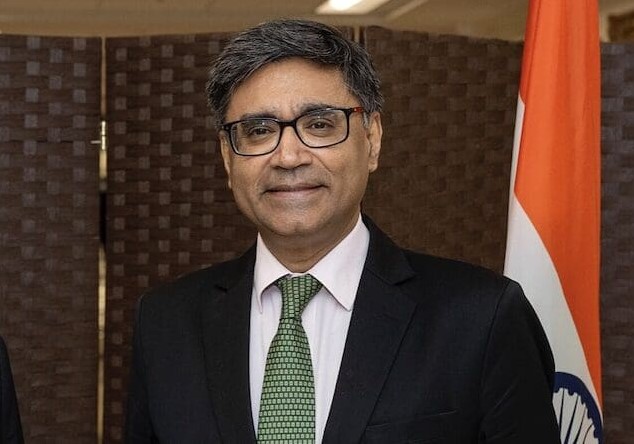
Indian Foreign Secretary Vikram Misri said on Wednesday a cabinet committee on security was briefed on the cross-border linkages of the attack and New Delhi would suspend a six-decade old river-sharing treaty as well as close the only land crossing between the neighbours.
“India’s reckless suspension of the Indus Waters Treaty is an act of water warfare; a cowardly, illegal move,” Pakistan’s Power Minister Awais Lekhari said in a post on X late on Wednesday night.
Misri, the top diplomat in India’s foreign ministry, did not offer any proof of the involvement or provide any more details.
New Delhi will also pull out its defence attaches in Pakistan and reduce staff size at its mission in Islamabad to 30 from 55, Misri said.
India has summoned the top diplomat at the Pakistan embassy in New Delhi, local media reported, to give notice that all defence advisers in the Pakistani mission were persona non grata and given a week to leave, one of the measures Misri announced.
Prime Minister Narendra Modi has called for an all-party meeting with opposition parties to brief them on the government’s response to the attack.
Dozens of protesters gathered outside the Pakistan embassy in New Delhi’s diplomatic enclave on Thursday, shouting slogans and pushing against police barricades.
In Islamabad, Prime Minister Shehbaz Sharif was scheduled to hold a meeting of the National Security Committee to discuss Pakistan’s response, Foreign Minister Ishaq Dar said in a post on X.
The Indus water treaty, mediated by the World Bank and signed in 1960, split the Indus River and its tributaries between the neighbours and regulated the sharing of water. It had withstood two wars between the neighbours since then and severe strains in ties at other times.
Diplomatic relations between the two countries were weak even before the latest measures were announced as Pakistan had expelled India’s envoy and not posted its own ambassador in New Delhi after India revoked the semi-autonomous status of Kashmir in 2019.
India and Pakistan control separate parts of Kashmir and both claim it in full.
Tuesday’s attack is seen as a setback to what Indian Prime Minister Narendra Modi and his Hindu nationalist Bharatiya Janata Party have projected as a major achievement in revoking the special status Jammu and Kashmir state enjoyed and bringing peace and development to the long-troubled Muslim-majority region.
India has often accused Islamic Pakistan of involvement in an insurgency in Kashmir, but Islamabad says it only offers diplomatic and moral support to a demand for self-determination.
Tens of thousands of people have been killed in Kashmir since the uprising began in 1989, but it has tapered off in recent years and tourism has surged in the scenic region.
What India’s suspension of the Indus Waters Treaty means for Pakistan — and for itself
By Harikishan Sharma
New Delhi, April 24 (Indian Express) – The Indus Waters Treaty (IWT) was signed by India and Pakistan on September 19, 1960, after nine years of negotiations to determine the distribution of the waters of the Indus and its tributaries.
The IWT which has survived four wars, decades of cross-border terrorism against India by Pakistan, and a long history of antagonism between the two countries, was suspended for the first time by New Delhi on Wednesday.
India made its decision a day after the attack on tourists in Pahalgam, in which Pakistani terrorists took the lives of 26 people.
“The Indus Waters Treaty of 1960 will be held in abeyance with immediate effect, until Pakistan credibly and irrevocably abjures its support for cross-border terrorism,” Foreign Secretary Vikram Misri said on Wednesday evening.
Among the slew of diplomatic actions against Pakistan announced by India — including the closure of the Attari border post, cancellation of visas, and the expulsion of several Pakistani personnel from India – the suspension of the IWT may have the most far-reaching ramifications.
What is the Indus Waters Treaty?
According to the provisions of the Treaty, all the water of the “Eastern Rivers” of the Indus system — Sutlej, Beas and Ravi — shall be available for the “unrestricted use” of India. Pakistan shall receive water from the “Western Rivers” — Indus, Jhelum, and Chenab.
So why is Wednesday’s decision by India significant?
The decision to suspend the IWT will straightaway give more options to New Delhi on how to use the waters of the Indus river system.
“For instance, India can immediately stop sharing water flow data with Pakistan. There will be no design or operational restrictions on India for the use of the water of the Indus and its tributaries. Also, India can now create storage on the Western Rivers, Indus, Jhelum and Chenab,” P K Saxena, former Indian Commissioner for Indus Waters, told The Indian Express.
India can also stop visits by Pakistani officials to the two hydroelectric projects currently under construction in Jammu & Kashmir — the Kishenganga HEP on Kishenganga, a tributary of the Jhelum, and the Ratle HEP on the Chenab — Saxena said.
“India can undertake reservoir flushing (a technique used to remove accumulated sediment from reservoirs by releasing water through low-level outlets to scour out the sediment and transport it downstream) on the Kishenganga project, which will increase the life of the dam,” he said.
However, the suspension will not have an immediate impact on the flow of water to Pakistan for a few years at least. India does not currently have the infrastructure to either stop the flow of water into Pakistan, or to divert it for its own use.
Can Pakistan trigger any arbitration clause under the IWT in response to India’s decision to suspend the Treaty?
The Indus Waters Treaty lacks an exit clause, meaning neither India nor Pakistan can legally abrogate it unilaterally.
The Treaty has no end date, and any modification requires the consent of both parties.
While the Treaty cannot be exited, it does contain a dispute resolution mechanism: Article IX, along with Annexures F and G, lays out procedures for raising grievances — first before the Permanent Indus Commission, then a neutral expert, and eventually, a forum of arbitrators.
Pakistan is yet to issue an official response to India’s suspension of the IWT.
However, in a 2016 interview with Dawn newspaper, a former Pakistani federal law minister, Ahmer Bilal Soofi, had said that arbitration may not offer much recourse if India chooses not to follow the Treaty.
“In case India ‘revokes’ the treaty, it literally means it has shunned it. The dispute resolution mechanism under Article IX and Annexes F and G of the IWT will be of no use and assistance to Pakistan. It is limited to a dispute under the treaty and not meant to provide for specific performance of the treaty itself,” Soofi had told Dawn.
“Since there is no provision in the IWT about its duration or suspension, there is no avenue that Pakistan can approach for ‘revival’ of the treaty. Nor can Pakistan approach the International Court of Justice seeking specific performance to implement the Treaty because of the Indian reservation given under the ICJ statute that bars the filing of a case by Pakistan against India. In other words, Pakistan will not be left with any peaceful mechanism for seeking performance of the treaty by India,” Soofi said.
Have India and Pakistan taken any other recent actions over the Treaty?
The two hydroelectric projects in Jammu and Kashmir have been a bone of contention between India and Pakistan for years now, leading New Delhi to issue a notice, in January 2023, to Islamabad seeking the “modification” of the Treaty.
This was the first such notice in the more than six decades of the Treaty’s existence. In September 2024, India sent another notice to Pakistan on this matter.
Pakistan objects to the design features of the two hydroelectric projects. Although they are “run-of-the-river” projects, which generate electricity without obstructing the natural flow of the river, Pakistan has repeatedly alleged that these violate the IWT.
In its January 2023 notice to Pakistan, New Delhi cited Islamabad’s continued “intransigence” in implementing the Treaty.
The September 2024 notice by New Delhi sought the “review and modification” of the IWT. The word “review”, according to experts, effectively signalled India’s intent to revoke, and renegotiate the Treaty.
Both notices were issued under Article XII (3) of the IWT which states that “the provisions of this Treaty may from time to time be modified by a duly ratified Treaty concluded for that purpose between the two Governments”.
In January this year, the Neutral Expert appointed by the World Bank in 2022 under the terms of the IWT, decided that he was “competent” to adjudicate on the differences between India and Pakistan regarding the design of two hydroelectric projects.
The Expert, Michel Lino, decided after holding three meetings with the parties concerned. During the meetings, Pakistan submitted that the “Points of Difference” raised by India did not fall within “Part I of Annexure F” of the Treaty, effectively taking the issue outside the remit of the Neutral Expert.
India, on the other hand, had argued that these fell “squarely and entirely” within the aforementioned part of the Treaty, making the Neutral Expert “duty-bound” to render a decision on their merits.
END
