

By Gitanjali Marcelline
Colombo, March 8 – Today, 8th March, marks International Women’s Day. Women’s Day (IWD), originally called International Working Women’s Day. In different regions the focus of the celebrations ranges from general celebration of respect, appreciation and love towards women to a celebration for women’s economic, political and social achievements.
Started as a Socialist political event, the holiday blended in the culture of many countries, primarily Eastern Europe, Russia, and the former Soviet bloc. It was Vladimir Lenin of Russia who declared March 8 as International Women’s Day in 1922 to recognize women’s role in the 1917 Russian Revolution and declared it as holiday.
In some regions, the day lost its political flavor, and became simply an occasion for men to express their love for women in a way somewhat similar to a mixture of Mother’s Day and Valentine’s Day.
In other regions, however, the original political and human rights theme designated by the United Nations runs strong and political and social awareness of the struggles of women worldwide are brought out and examined in a hopeful manner.
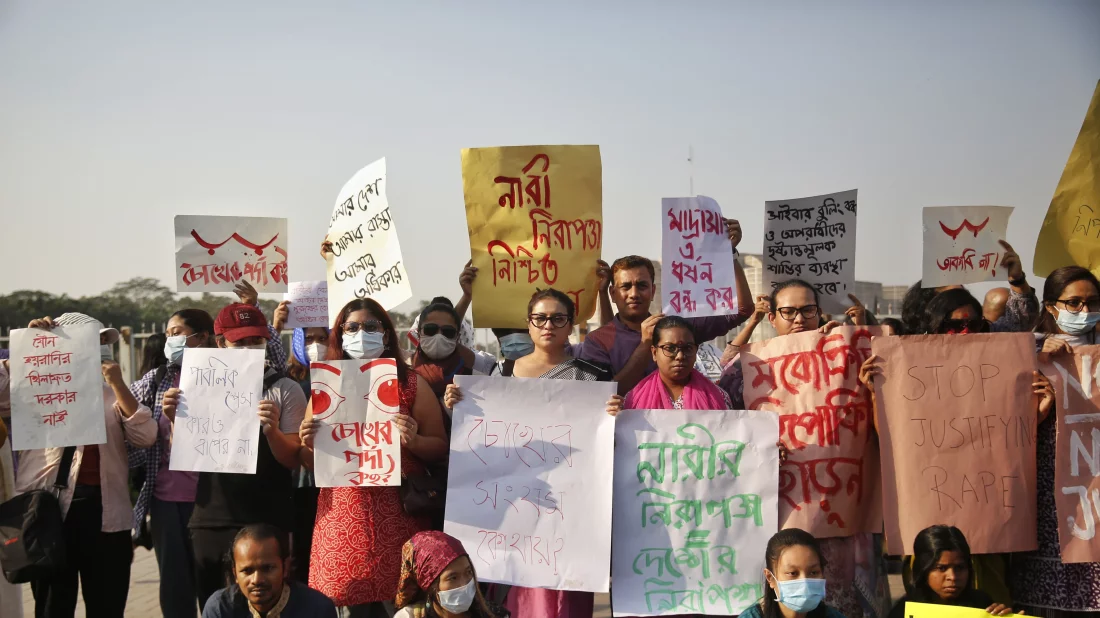
The UN theme for Women’s Day in 2013 was: “A promise is a promise: Time for action to end violence against women (VAW)”. Here, the emphasis is on keeping the promise made to take action to end violence against women. Does this mean that the UN has failed to keep its promise? Let’s revisit history to find out.
The United Nations General Assembly defines “violence against women” as “any act of gender-based violence that results in, or is likely to result in, physical, sexual or mental harm or suffering to women, including threats of such acts, coercion or arbitrary deprivation of liberty, whether occurring in public or in private life.” The 1993 Declaration on the Elimination of Violence against Women noted that this violence could be perpetrated by assailants of either gender, family members and even the “State” itself. The Declaration goes on to state that “violence against women is a manifestation of historically unequal power relations between men and women, which have led to domination over and discrimination against women by men and to the prevention of the full advancement of women, and that violence against women is one of the crucial social mechanisms by which women are forced into a subordinate position compared with men.
Worldwide governments and organizations actively work to combat VAW through a variety of programs. A UN resolution designated 25 November as ‘International Day for the Elimination of Violence against Women’ (Resolution 54/134). The promise of the day is to raise awareness of the fact that women around the world are subject to rape, domestic violence and other forms of violence, and the scale and true nature of the issue is often hidden.
Historically the date came from the brutal assassination in 1960 of the three Mirabal sisters, political activists in the Dominican Republic, on orders of Dominican dictator Rafael Trujillo (1930–1961). In 1981 women’s activists have marked November 25 as a day to fight violence against women more broadly. Then on December 17, 1999 the date received its official UN resolution. The date also marks the start of the 16 Days of Activism that will lead up to Human Rights Day on 10 December.
So, despite all these initiatives, why is VAW on the rise? Let’s examine our conscience – what have WE done to end VAW? Have we been too caught up with our day to day work to give any thought to VAW? At the rate VAW is happening around the world (including Sri Lanka), does it not scare you that next time round it might be your mother, grandmother, wife, daughter, sister, cousin, relative, friend or colleague that might be violated? It’s not too late to think about it and take action.
Believe you me you’ll be glad you did!
end
