

By PK.Balachandran
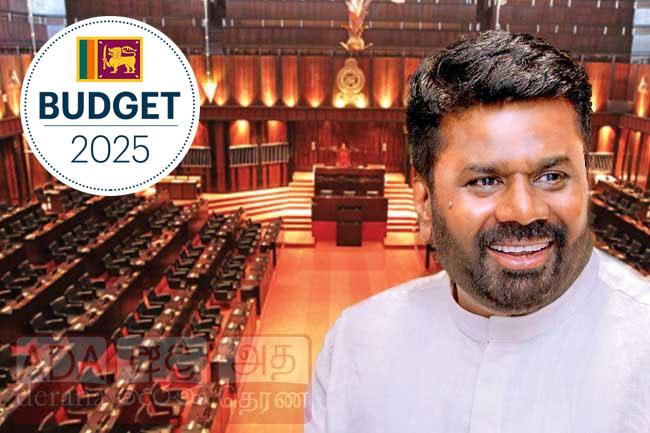
Colombo, February 17 – Sri Lanka’s 79th annual budget that was presented to parliament on Monday, basically aims to meet the expectations of the masses who had overwhelmingly voted for President Anura Kumara Dissanayake and his National Peoples’ Power (NPP) party in the recent Presidential and parliamentary elections.
But it has not been oblivious to the need to give the economy a sound base to enable it to meet its huge international debt obligations.
The people of Sri Lanka had been experiencing shortages of essentials, besides a paucity of income, and were therefore expecting new comer Dissanayake to break from the past and give meaningful reliefs.
And they were not disappointed. The budget met the needs of every section of Sri Lanka including the Tamils of the war-torn North and the poor Tamil workers in the tea estates.
In a succinct summing up of the budget, Shiromi Weerasekara, a middle class resident of Kaduwela near Colombo, said, “After a long time, the country’s budget has addressed the current needs of the people, while also providing for future growth.”
Bread flour prices have been reduced by LKR 10 per kilogram effective from February 18. The allocation for the health sector has been increased to LKR 604 billion. LKR 185 billion has been allocated for the supply of medicines. LKR 7.5 billion is allocated to supply nutrition packs for pregnant mothers, besides LKR 5 billion for the ‘Thriposha’ nutrition programme.
To address the longstanding neglect of school infrastructure, the government has allocated LKR 10,000 million for renovations that have been pending since 2019. In a bid to strengthen early childhood education, the budget has increased the per-meal payment in the pre-school nutrition program from LKR 60 to LKR with Rs. 1,000 million allocated for this initiative.
Additionally, LKR 80 million will be used to establish a model Early Childhood Education Centre.Recognizing the role of pre-school teachers, their monthly allowance will be increased by LKR 1,000, for which LKR 100 million has been set aside.
The government has proposed developing primary schools within a 3 km radius of children’s homes or parents’ workplaces to improve accessibility. Given the disparities in school distribution, a national plan will be launched to review and relocate schools as needed. LKR 500 million has been allocated to implement this plan.
The budget gives a boost to student scholarships. Monthly Grade 5 scholarship benefits will increase from LKR 750 to LKR 1,500, with LKR 1,000 million allocated under this head. Students in sports schools will see their monthly nutritious food allowance doubled from LKR 5,000 to LKR 10,000.
Vocational education students will receive an increased stipend from LKR 4,000 to LKR 5,000 per month, with an additional LKR 200 million allocated. The Mahapola scholarship will rise from LKR 5,000 to LKR 7,500, and bursaries will be increased from LKR 4,000 to LKR 6,500, supported by a LKR 4,600 million budget allocation.
A new program will offer top-performing Advanced Level school students scholarships to pursue undergraduate degrees at high-ranking universities abroad, with LKR 200 million allocated for this initiative. To foster sports excellence, the government will invest LKR 500 million in specialized sports schools across five provinces: Western, Northern, Central, Uva, and North Central. Schools will be selected based on the records of past or present students who have excelled in local and international competitions.
Additionally, LKR 135,000 million has been earmarked to enhance the quality of the university system, ensuring better facilities and resources for higher education students.
The Jaffna Library, an essential hub for students and researchers, will receive LKR 100 million for infrastructure upgrades. Additionally, LKR 200 million will be used for the enhancement of regional libraries across the country.
The budget proposes an increase in the duty free allowance given to expat workers “We are exploring how to provide incentives for this important community; as a first step we propose to increase the duty free allowance available to them at the airport,” Dissanayake said.
Bonanza for Public Servants
Dissanayake said that the minimum basic salary in the public sector will be increased by Rs. 15,750, raising it from Rs. 24,250 to Rs. 40,000. This adjustment will benefit employees across various sectors, including judicial services, state corporations, statutory boards, university staff, and tri-service officers.
In addition, the existing ad-hoc interim allowance and special allowance will be consolidated into the basic salary, along with a net increase of Rs. 8,250 in the basic minimum wage.
Under this revision, the minimum increment of Rs. 250 will rise to Rs. 450, while the increment of Rs. 500 will increase to Rs. 900.
The total estimated cost for implementing this salary revision is Rs. 325 billion, with an initial allocation of Rs. 110 billion in 2025. nior Citizens
Senor Citizens
To increase the financial stability of senior citizens (those above 60 years) deposits of up to LKR 1 million will receive an interest 3 percent above the market rate.
“If they have LKR 2 lakhs they will get 3 percent more annually than the market rate. If they have LKR 10 lakhs they will get LKR 30,000 more. That is LKR 2,500 more monthly. We have set aside 15,000 million rupees to give senior citizens this benefit. This will be effective from July 2025,” Dissanayake said.
Social Protection/“Aswesuma” benefit enhancement
In order to ease the burden of vulnerable communities, the Government will take necessary steps to safeguard them by enhancing the cash grants for those in the social registry. Accordingly, the Government has increased social protection programme net spending to LKR 232.5 billion in 2025.
The increase in the monthly benefit allowance paid to the two social groups; the poor and the extremely poor from LKR 8,500 to LKR 10,000 and from LKR 15,000 to LKR 17,500, respectively. This has already been implemented with effect from January 2025.
It is proposed to increase the monthly allowances for kidney patients and people with disabilities from LKR 7,500 to LKR 10,000. The monthly allowances for elderly persons will go up from LKR 3,000 to LKR 5,000 with effect from April 2025.
Infrastructure Modernization
As an initial step towards enhancing public sector transportation, a modern and comfortable fleet of technologically advanced buses will be introduced on a pilot basis. A hundred 100 air-suspension, low-floor, comfortable buses will be deployed along three main road corridors within Colombo city. It is proposed to allocate LKR 3,000 million for the procurement of 100 low floor buses.
In addition to that SLTB will add 200 low-bed passenger buses for its fleet through its own funds. These buses will be operated under newly established companies collectively known as Metro Bus Companies (MBC). Proposed bus companies will operate on a fully digitized platform.
It is proposed to allocate LKR 3,000 million for improvement and rehabilitation of rural roads, giving priority to roads that connect less developed rural villages, tourist destinations, industrial estates and economically significant places/areas in addition to the already allocated amount of LKR 26,680 million for the development of the rural roads island wide.
Aiming at ensure safe and reliable mobility to all users, it is proposed to allocate LKR 1,000 million for the rehabilitation of rural bridges in addition to the already allocated amount of LKR 1,000 million for the development of the rural bridges island wide
Rail-based public transportation is highly important in long distance as well as the urban and sub-urban areas. However, the poor condition of the coaches negatively impacts passenger safety, comfort, and train speed. Further, it is important to establish the railway system as an industry while focusing on repairing and building new coaches within the country.
Accordingly, as a first step, it is proposed to allocate LKR 500 million to rehabilitate old railway passenger coaches targeting to rehabilitate passenger coaches to enhance the efficiency of services and cater the growing passenger demand. I
t is proposed to allocate LKR 250 million for 2025 to the Department of Railways to initiate building new coaches aiming at fulfilling new passenger coach requirements within the country.
In order to provide an efficient railway service and improve public transportation facilities, it is proposed to extend the Kelani Valley Railway Line, which currently operates up to Avissawella, beyond Avissawella in phases. An allocation of LKR 250 million will be made through the 2025 budget to begin the initial work related to this.
The Government will continue to invest in the Kandy multi-modal transport terminal development project which would have important spill-over effects in terms of regional development.
Rail Transport for Agricultural Products
Transporting agricultural goods over the road network remains a major challenge due to high costs, post-harvest loses during transportation, road congestion, and environmental concerns. It is proposed to introduce a dedicated rail-based transportation of agriculture products from production centres to destinations.
SriLankan Airlines’ Debt
SriLankan Airlines (SLA) performs a leading service in the transportation of passengers and cargo by air. Furthermore, previous Governments’ attempts to divest state ownership and attract private investment have also been unsuccessful. In light of this, the Government would sign an agreement with those banks and set aside LKR 10,000 million for loan capital repayment in 2025 as well as LKR 10,000 million for interest payments.
The Airline would be fully responsible for ensuring operating profitability once these legacy debt service costs are settled by the Government. A new medium term strategic plan is being devised by the company towards this end. Accordingly, it is proposed to allocate LKR 20,000 million for this purpose.
Northern Province
It has been observed that the war-torn Northern province has been largely isolated from mainstream development. However, it holds tremendous potential to contribute significantly to our economy, the budget said. As such, focusing at the rehabilitation of basic infrastructure needs, it is proposed to allocate LKR 5,000 million for the rehabilitation and improvement of rural roads and bridges in the Northern Province.
The Vadduvakal causeway is a narrow bridge over the mouth of the Nandikadal lagoon in Mullaitivu, which is the main artery connecting Mullaitivu, Pudukkudiyiruppu, and Jaffna. This bridge is in a dilapidated condition which creates risks to commuters. It is proposed to build Vadduvakal bridge aligned with the developmental needs of Mullaitivu District. It is proposed to allocate LKR 1,000 million under this budget to commence work accordingly.
Each Sri Lankan MP is to be allocated LKR 10 million for 2025. In this context, we propose to allocate Rs. 2,000 million in the budget 2025 to address these emerging issues at district level. Sri Lanka MPs represent districts.
Eastern Province Development
Eastern Province is one of the provinces with a huge potential for economic development. Therefore, it is proposed to implement a comprehensive development programme in the Eastern Province with the Indian Multi-sectoral Grant Assistance to support infrastructure and livelihood development, focusing mainly on education, health, agriculture, fisheries, tourism and community empowerment sectors.
Malayagam Tamils
The Malayagam people are a part of the Sri Lankan nation and have been living with significant difficulties over a long period of time. Therefore, LKR 7,583 million has already been allocated to support initiatives. LKR 4,267 million is allocated for development of estate housing and infrastructure development. LKR 2,450 million is allocated for Vocational training, Livelihood development and Infrastructure Development of Malayagam Tamil youth. LKR 866 million is allocated for smart class rooms for schools in Malayagam Tamil community.
Industrial Development
The industrial sector in Sri Lanka plays a crucial role in its economy predominantly in providing employment opportunities, increasing income, fostering innovation, and driving exports. There will be an Industrial Zone dedicated for Chemical Manufacturing. With the aim of improving value addition to Sri Lanka’s extensive mineral resources and providing essential industrial inputs for domestic manufacturing. It is proposed to establish an Industrial Estate in Paranthan, Northern Province, dedicated for chemical product manufacturing including acids and alkalis.
There will be 5 Industrial parks in Kankesanthurai, Maankulam, Iranawila, Galle and Trincomalee with an allocation of LKR 500 million.
An Industrial Zone dedicated for Automobile and Rubber products manufacturing will be set up. It is proposed to manage this with the already allocated budgetary provisions of LKR 1,500 million under the Ministry of Industry. In order to link to the global value chain, it is proposed to allocate LKR 250 million to implement an integrated product development and trade promotion programme on Ceylon cinnamon and other export crops.
Fisheries & Aquaculture
Limited availability of freshwater prawn seeds is identified as a major constraint to further develop the freshwater prawn farming industry in Sri Lanka. In order to promote the stocking of freshwater prawn in tanks and non-traditional aquaculture, and enhance the future production towards export economy, it is proposed to empower farming community/fisheries societies and local communities and establishment of freshwater prawn hatcheries under Public Private Partnership (PPP) arrangements, farmer cooperatives and marketing networks and facilitate farmer societies to link with such marketing networks as well. For this purpose, it is proposed to allocate LKR 200 million.
Making the Rich Pay
Sri Lanka will charge an 18 percent levy on gross collection of casinos and increase the entrance fee to US$ 100 from US$ 50 per person, the budget said. Corporate tax on tobacco and alcohol will be raised. The stamp duty on lease contract (other than hire purchase) will be raised to 2 percent from the current one percent.
A digital services tax will also come into play as an inclusion in to VAT. Capital gains tax for individuals raised to 15 percent from 10 percent.
The term “transportation of Goods and passengers” will be defined to include the services provided in relation to international transportation by container terminal operators.
Exemption provided under Item 24 of Part 1A of the first Schedule to the SSCL Act, will be granted for machinery or equipment imported or purchased locally for the purpose of generating electricity by any institution which has entered in to an agreement with the CEB prior to February 18, 2025.
President Dissanayake’s new expenditure proposals need an additional LKR 225 billion. Speaking on this, Dissanayale said, “For the year 2025, the bulk of revenue gains is expected to be delivered by the liberalisation of motor vehicle imports that took place on 1st February 2025. This process is being carefully monitored to ensure that import of vehicles does not result in undue negative impacts on external sector stability.”
Former President Ranil Wickremesinghe’s government committed the International Monetary Fund (IMF) to implement an asset tax including imputed rental income tax from 2025. But the 2025 budget said, “The Government decided to not pursue this year the Imputed Rental Income Tax. To compensate for any revenue losses, the Government already presented in Parliament measures including the introduction of VAT on digital services, the imposition of corporate income tax on export of services, and an increase in the corporate tax on cigarettes/liquor, and gaming.”
The government expects its tax policy measures to deliver the required revenue to enable Sri Lanka to meet the revenue targets of 15.1 percent of GDP in 2025.
“Nonetheless, in parallel, the Government is taking concerted efforts to improve tax administration and compliance. In fact, Sri Lanka’s revenue strategy for the upcoming budget aims to enhance fiscal sustainability by strengthening tax administration, improving compliance, improving institutional strength through enhanced digitalization and rigorous monitoring mechanisms; while providing relief to the most vulnerable groups of the society.”
“Efforts will be directed toward digitalizing tax systems to reduce leakages and enhance transparency while minimizing human interactions in tax administration,” the budget said.
END
