
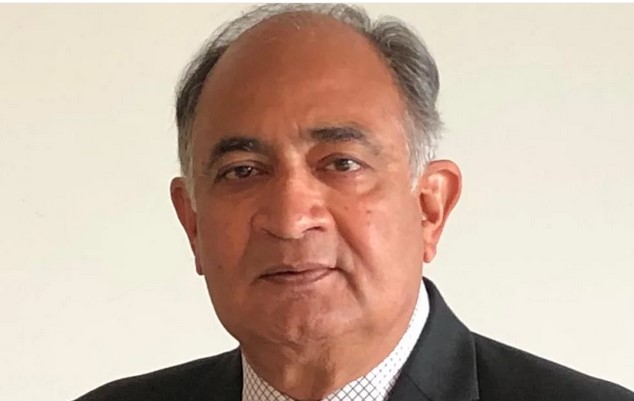

New Delhi, January 24 (India’s World): In this Exclusive Interview with India’s World, former RA&W Special Secretary Amitabh Mathur discusses the ‘new reality’ in Bangladesh. He places the dramatic political transition within a broader historical context, and explains the regional security and geopolitical implications for India
India’s World: How do you read the so-called new reality in Bangladesh today?
Amitabh Mathur: It brings a sense of Déjà vu. We saw this happen in 1975 when it completely repudiated everything Sheikh Mujib stood for. And now we see it again in 2024, a rejection of not only Sheikh Hasina but, once again, of Sheikh Mujib.
You see, Bangladesh has perhaps two broad identities. The origins of one can be traced back to 1947. While the history of our partition in the North is well known, little is known or read in the North of the horrors that transpired before and when the East was partitioned by the British on communal lines. For instance, the Muslim League was formed in Dhaka in 1905. In the 1940s, the famine overlapped with recurrent riots in the region. 1941, 46, 47 (Partition), 48, 50. Mahatma Gandhi fasted in both Calcutta and Noakhali, which is today in Bangladesh. The communal overtone was further exaggerated because 95% of the zamindars in East Bengal (or East Pakistan) were Hindus, and the people under them were Muslims. So, one identity broadly stems from the partition.
Then, we have the Bengali identity of 1971. It was a product of the language movement in Pakistan, and it was not a repudiation of their Islamic identity but primarily an assertion of their Bengali identity [against Pakistan], underscored by pride in Bengali literature and culture.
The conflict between these two identities has been ongoing for a very long time. We tend to forget that even in 1971, 35 to 40% of Bangladeshis voted in favour of remaining in Pakistan. Thus, the BNP, after a series of transitions, can be seen as their successor perhaps. At the same time, the Bengali identity of 1971 is complex [beyond Awami League’s appropriation]. Yes, it included secular Muslims and Hindus, but it also included military freedom fighters like Ziaur Rahman (the founder of BNP).
So, this transition in 2024, the new reality we are confronted with, I view it as a continuation of identity transitions (and conflict) that have occurred in Bangladesh over decades and will perhaps continue to occur.
IW: Catalyzed by certain immediate circumstances; that is a failure of, let’s say, democratic processes under the previous administration?
AM: You’re absolutely right. The 1975 coup against Mujibur was largely because of his maladministration. Some factors were beyond his control, but many problems were of his own making, such as his dictatorial streak – banning all political parties and using the militia.
Sheikh Hasina repeated some of his missteps. And in her case, you are right; everything was hunky-dory till 2019. COVID happened; once we recovered from that, Ukraine happened, and then the Middle East happened. The international context and the economy doing well meant that what she could get away with in 2019, she was unable to get away with in 2024.
IW: What are some real security concerns for India that emanate from Bangladesh today?
AM: Everyone talks of militants or North Eastern insurgents getting a foothold over there, and that is certainly a reality. If you have an inimical government in Dhaka, it may facilitate this, which has happened in the past – in Zia’s time, Ershad’s time, and during the BNP’s second administration.
However, the bigger problem may be the communal problem, which manipulates our internal political agenda. If the Hindus in Bangladesh are mistreated, then there is an uproar over here, and communalism feeds on communalism. In other words, the disruption of our political discourse is also a real security threat.
Furthermore, if Bangladesh doesn’t perform well [economically], it will lead to migration into India. We can’t take any more people into our country; we don’t have enough [resources] for our own. That is also a security concern.
IW: How do you see China and Pakistan as part of this regional security or geopolitical calculus and their ability to take advantage of the complex situation in Bangladesh today?
AM: Well, I think China is a net gainer because it is deeply involved in Bangladesh’s infrastructure and economic activity. But they walk a tightrope. They operate under the radar. But like in Nepal, in Bangladesh, they are slowly building up assets, not merely economic but also political assets. They have a long-standing relationship with the army as a major arms supplier and will further deepen such links.
China also seeks an outlet into the Bay of Bengal as part of its Belt and Road Initiative, so we must be wary of this. The extent to which they will show their hand depends on their perception of the American reaction.
As far as Pakistan is concerned, for the last few decades, Pakistan has followed a policy of intelligence encirclement of India. Today, when it is in dire straits, financially and militarily, and when it is isolated, Pakistan cannot embark on any major adventure against us. It may even tone down infiltration in Kashmir.
However, Pakistan will not give up the opportunity provided in Bangladesh and will be a disruptive force. I hope Dhaka can understand that India would not tolerate certain red lines being crossed, but there is no dearth of people willing to collaborate with Pakistan. This is a potentially troublesome situation that we face.
IW: There has been a lot of conversation about the role of the United States in bringing about the so-called revolution. What is your take on that?
AM: I don’t think so. If the Americans had a role in bringing about this change, they would have taken a more proactive role in assisting the advisory council to keep its sheen, which it has lost rapidly. I think the American aspect has been overplayed, but surely the Americans are taking advantage of it like anybody else would.
IW: How so?
AM: I’ve always felt that the Americans want some sort of a foothold in Bangladesh. In 1998, they almost signed a Status of Forces Agreement with Bangladesh on the pretext of disaster management, which would have allowed American troops to come in visa-free, not have their equipment checked, and have immunity from Bangladeshi law. Were they seeking some sort of a listening post? God knows. But an American interest in Bangladesh has always existed; this time, perhaps it’s a little more overt.
Even in 2019, I think they were very active about wanting a free and fair election, which did not happen, unfortunately, and again, they wanted more involvement in the 2024 January elections, but that didn’t happen. But they quickly welcomed this change and sent people to this caretaker council. Several people in the cabinet are from NGOs with good relations with the Americans, which has given an impression that the Americans are in control or are guiding it. Still, I don’t think that’s true.
IW: What should India’s policy be towards the current unstable status quo in Bangladesh?
AM: First, we don’t know who to deal with, who’s in control. Is it the students? Do we see the background of all the student leaders? I think they come from diverse political leanings. Do we deal with the advisory council members, some of whom are from the NGOs? Do we deal with the army? Do we deal with the Jamat? So, I think the first problem is to figure that out.
Secondly, the situation is unravelling rather rapidly, and faith in the advisory council is plummeting daily, largely because of unemployment and rising prices. Day-to-day living has become very difficult. And Ramzan is approaching next month. So, things are in a very combustible state, which makes meaningful engagement with Dhaka quite difficult.
I think the Interim Government has made serious mistakes. To begin with, it has not been able to control its urge for vengeance, and as a result, they have gone after everyone affiliated with the Awami League. This includes key businesses, such as BEXIMCO and Gazi Group. Many dozens of factories have been shut down or ransacked. Consequently, tens of thousands have become unemployed.
Every day is chaos, and every day there are demonstrations. Just today, the Bangladesh Railways went on strike, and all trains came to a standstill. You read daily about garment export units closing down, and their employees, who are not getting paid, are blocking road traffic. As a result, garment exporters are unable to meet their deadlines, leading to falling orders. A primary source of earnings for Bangladesh has decreased by $4 billion, which is not a small amount for the country. Remittances are rising, but the dollar rate on the street and in the bank is very different, so people are sending money through the Hawallah route. The status there is in a state of flux.
IW: So the Indian response should be…?
AM: We should be patient and watchful. Until things are sorted out within Bangladesh, we should continue our economic and other engagements and keep some distance from any possible outcomes.
IW: If there are elections later this year in Bangladesh, and we see a situation where the BNP comes to power with support from the Jamat, should India wholeheartedly deal with this new government despite anti-Indian rhetoric coming from that side?
AM: Unless it’s a blatantly biased or fixed election, we should welcome whatever the people decide. I think India is strong enough today to deal with any government, even if they don’t see eye to eye on some issues.
I don’t think the BNP will be disruptive; we can work with them. We’ve dealt with them in the past, and we didn’t have a very good experience, but we learned from the past, as I’m sure they’ve learned from the past. If changes have to take place in Bangladesh, it will be a good thing if they take place under an elected body with a mandate from the people and some legitimacy, not an advisory council that has appointed itself.
IW: Thank you very much, sir.
END
