

By P.K.Balachandran/Daily News
Colombo, March 31 – India, which is known for the hold of tradition on its people, has progressed in giving rights to transgender individuals and those entering interreligious marriages. But many obstacles to the fulfilment of the aspirations of transgender people and those aspiring to marriage across faiths remain. Fresh chains have been put on live-in couples in Gujarat and Uttarakhand, and other states might follow.
The Indian State is showing an increasing tendency to enforce traditional values as part of its mission to “Indianise” notions of accepted social behaviour and reject “Western” notions of right and wrong.
The Indianisation drive is affecting transgender rights, the rights of couples who want to marry across religious divides and couples who do not want to marry but live together.
In India, the identification of one’s gender (in the case of transgender persons) is not the prerogative of the individual concerned but that of the State, assisted by a board of medical examiners. Likewise, an inter-religious marriage is subject to State approval, which in turn is predicated on social approval. These are written into the legal system and are therefore mandatory.
Self-identification of Gender
The international norm, as outlined in Article 16 of the International Covenant on Civil and Political Rights (ICCPR), is that each person’s “self-defined sexual orientation and gender identity” are integral to their personality and are among the most basic aspects of self-determination, dignity, and freedom.
The Indian Supreme Court had accepted each person’s deeply felt internal and individual experience of gender, which may or may not correspond with the sex assigned at birth. The Court had declared that the international convention is “not inconsistent with” the fundamental rights in Part III of the Indian Constitution.
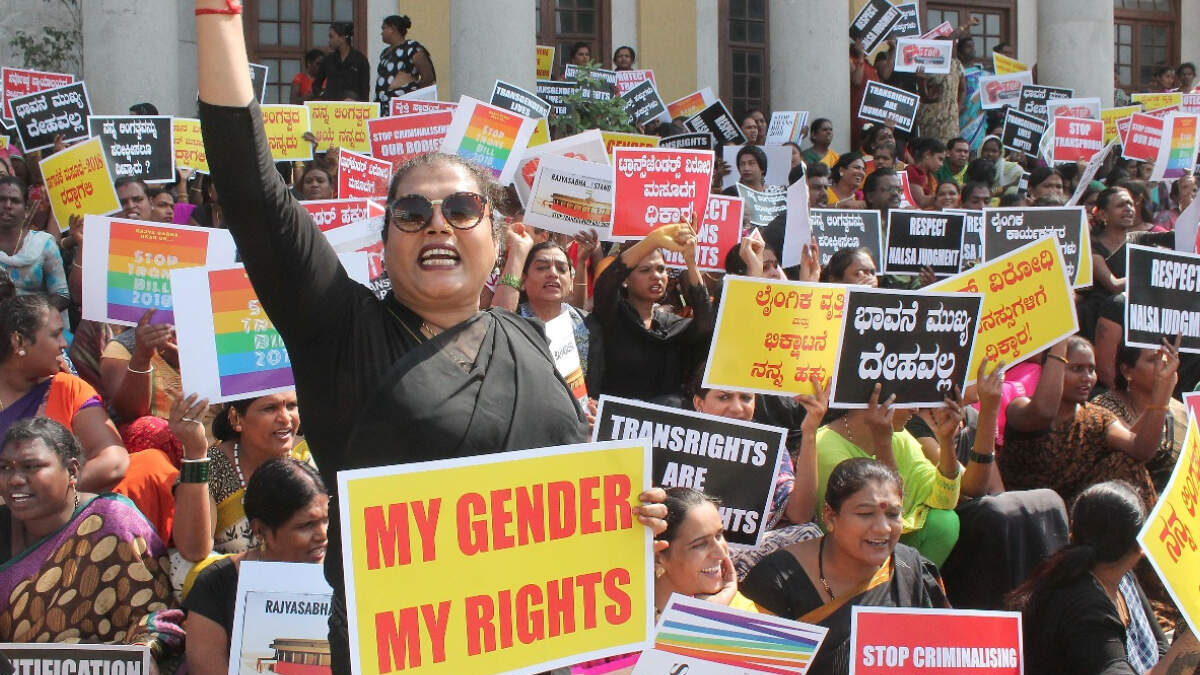
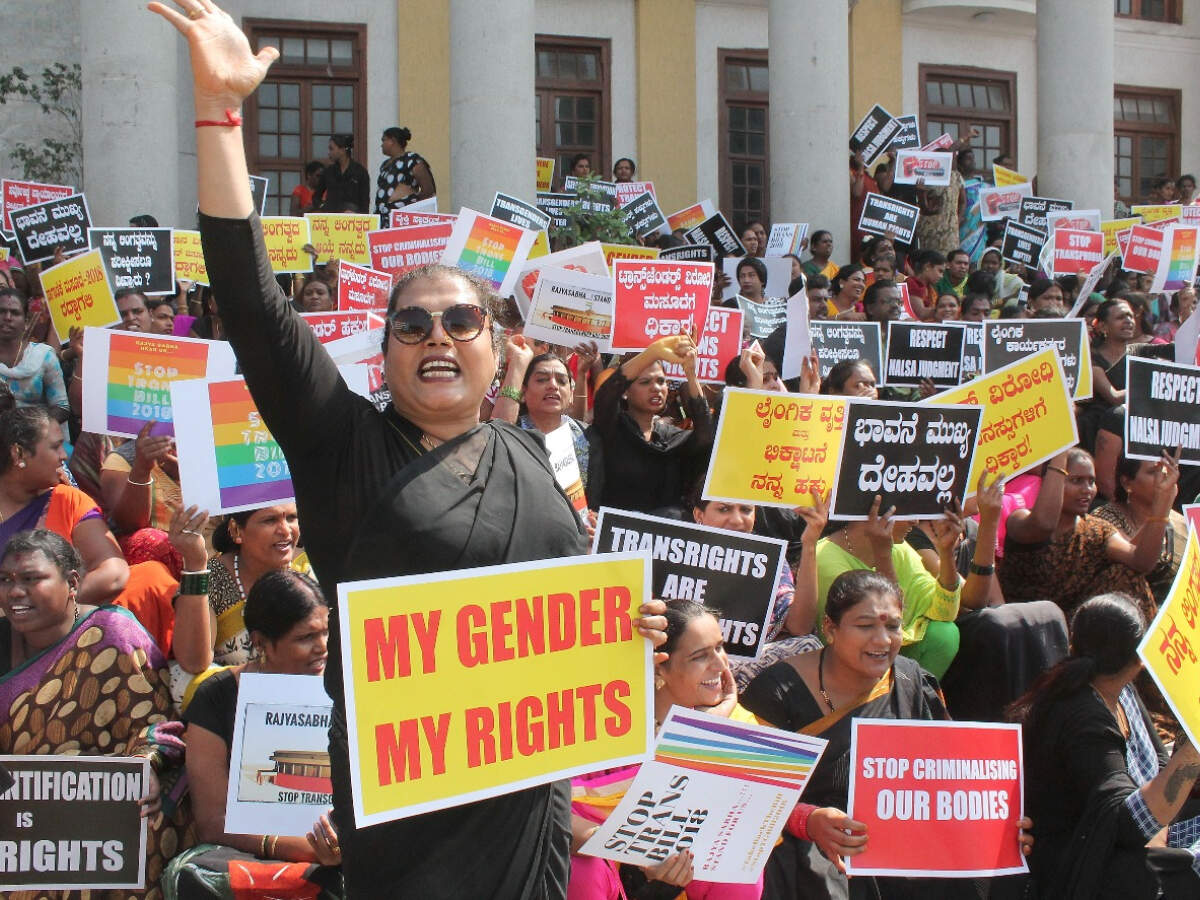
The National Legal Services Authority (NALSA), which is located in the Indian Supreme Court, directed the Union and provincial governments to grant legal recognition of transgender persons’ self-identified gender as male, female, or third gender without requiring surgery or medical certification. The right to self-perceived gender identity was subsequently enshrined in section 4(2) of the Transgender Persons (Protection of Rights) Act, 2019.
But in practice, bureaucratic adjudication and imposition of gender identities continued. Complicating matters, there is now an amended law that doubles down on the restrictions.
Clause 3 of the amended act deletes section 4(2), which had expressly recognised the right to self-perceived gender identity, and replaces it with a framework in which identity is determined through a District Magistrate acting on the recommendation of a medical board. But the amended section 6 (1) grants the Magistrate discretion over whether to consult the board.
Section 6(4), inserted by the amendment, grants certificate-holders the right to change their first name in official documents.
The 2026 Amendment Act thus reorients the 2019 Act away from the constitutional framework of self-determination that the Supreme Court had said accords with international norms.
Same sex marriage
Consensual homosexual relations between adults were decriminalised in 2018. It stated that it would not be a criminal offence to be gay or lesbian. But the age of consent law continued to apply. LGBTQ+ individuals could live openly together without fear of arrest. But marriage was not allowed nor could the couple claim family rights.
In 2023, there were petitions from same sex couples seeking legal recognition of same-sex marriage, equal rights under marriage laws, the right to adopt, inherit and have succession rights.
Arguments in favour of such rights are that the Right to Life and Liberty in the Constitution (Article 21) includes the right to marry a partner of choice. Gender should not matter. Traditionalists, who are in the majority both in society and the courts, insist that marriage should only be between a man and a woman. If there is to be a change in the marriage laws, they will have to be brought about by parliament, not the courts.
The second argument against same sex marriage is that the personal laws of religious communities in India do not allow same sex marriage.
But the court was divided 3:2 on this matter. The majority opinion was that same-sex marriage cannot be legalised. At any rate, it will be for parliament to decide on the matter as it is the people’s forum. However, the court upheld the principle that LGBTQ+ people must not be discriminated against or penalised.
The dissenting two judges said that it same sex civil unions should be legally recognised and adoption rights granted. If only parliament could grant these rights, such revolutionary rights would never see the light of day, given how social norms take decades to change.
But the court wanted discussion of these matters to be instituted and recommended the setting up of a committee to examine the rights of unmarried same sex couples.
At present, Indian same sex couples can live together or cohabit and have a consensual relationship with no criminal liability; have joint bank accounts as friends/partners but not as a married couple. They can nominate the partner in insurance accounts, bank accounts, leave property to the partner, or rent or buy property together as co-owners or joint tenants.
However, the same sex couple cannot adopt a child as a couple but as individuals. There is no room for automatic inheritance or to be a legal heir. They are not entitled to spousal visas.
More than 30 countries (as of 2025), including USA, Canada, the UK, most of Europe, Australia, New Zealand, Taiwan, and Thailand (2024) allow same sex marriage. The global trend is towards the legalisation of such unions
Interfaith Marriages
Interfaith marriages, where individuals from different religious backgrounds come together in matrimony, highlight the blend of personal freedom, cultural diversity, and legal complexities.
But in India, interfaith marriages often spark significant social and legal opposition. India does offer legal avenues for solemnizing interfaith marriages, ensuring individuals can marry across religious lines while retaining their personal freedoms.
The primary legal provision for such marriages is the Special Marriage Act of 1954 (SMA). It provides a comprehensive legal framework for the registration and solemnization of all marriages, both within religious groups and across religious groups. The SMA ensures such unions’ legal recognition and protection.
Provisions of the Special Marriage Act
Couples planning to marry under the SMA must give a 30-day notice to the Marriage Registrar in the district where at least one partner has resided. The notice is publicly displayed at the Marriage Registrar’s office, inviting objections. Any objections must be resolved within 30 days. Valid objections typically relate to the age of the parties, existing marital status, prohibited degrees of relationship, or mental incapacity. If no objections are upheld, the marriage can be solemnised in the presence of three witnesses and the Marriage Registrar. Following the ceremony, the marriage is registered, providing legal recognition and documentation.
However, interfaith couples face numerous challenges in India stemming from legal, social, and familial opposition. These challenges can impact their decision to marry, their marital life, and their interactions with society.
The 30-day notice period under the SMA can expose couples to societal scrutiny and even harassment, often discouraging them from pursuing the legal route. Couples residing in different districts may face jurisdictional hurdles, complicating the registration process. In some cases, local authorities or police may be unsupportive, reflecting societal biases against interfaith marriages.
Interfaith couples may also encounter backlash from their communities, including exclusion, social ostracism, and occasionally threats, particularly in conservative or tightly-knit social settings where traditional norms hold sway. There is often pressure on one or both partners to convert to their spouse’s religion to gain acceptance, adding to the strain on them.
Legal or familial challenges, such as disputes over child-rearing practices and inheritance rights, frequently arise. These issues can escalate, especially when family members dispute the legitimacy of a spouse’s claims to assets or property .
Indian society’s views on interfaith marriages are shaped by cultural, religious, and regional factors. While urbanization and globalization have fostered greater acceptance in some areas, traditional and conservative mindsets continue to dominate in many regions.
Live-in Relationships
In States like Uttarakhand and Gujarat, a male and female cannot live together without getting married or without getting registered with the local authorities.
The Gujarat Uniform Civil Code bill cleared by the Gujarat cabinet, mandates that partners in a live-in relationship should formally submit a statement of their relationship to the District Registrar within whose jurisdiction they reside. The termination of such a relationship must also be officially notified.
Crucially, any child born of a live-in relationship will be treated as a legitimate child of the couple. A woman deserted by her live-in partner will be entitled to claim maintenance.
The Uttarakhand State had introduced a similar law in January 2025. By enforcing proper legal documentation, these governments aim to reduce misuse, prevent exploitation, and eliminate legal uncertainties surrounding such relationships.
END
Indian laws curtail the rights of transgender individuals, interfaith and live-in couples
