

By P.K.Balachandran/Daily Mirror
Colombo, March 28 – All through history, assassination has been resorted to by the power-hungry and the aggrieved. It has been used in palace power struggles, as a tool to further a political cause, or to redress a deeply felt grievance.
It is often the tool of the weaker party to prevail over the stronger one. It is used to shock and awe a particular set of people into submission, to create chaos and bring about the collapse of a despised system in one stroke. It is used in national and international politics as legitimate policy. In recent times, it has been used as a tool in “transnational repression” by States. Transnational repression refers to knocking off a country’s enemies or dissidents residing abroad.
However, studies show that the complete efficacy of assassination has not been established. The results are mixed. It succeeds in bringing about the desired changes in some cases and proves to be a dud in others. Sometimes, an assassination results in severe reprisals, grievously injuring the assassin’s cause.
But irrespective of its questionable record, assassination has been a favoured tool down the ages. The latest application of it has been in the Iran war by Israel. The assassination of the Iranian Supreme Leader Ayatollah Ali Khamenei and his key lieutenants is a classic example of an assassination that, instead of giving a death blow to Iran, only made it stronger. Instead of collapsing like a house of cards, the Iranian regime got stronger and began giving a fitting reply to the assassins – Israel and the US. The Gulf States suffered collateral damage because they host US bases.
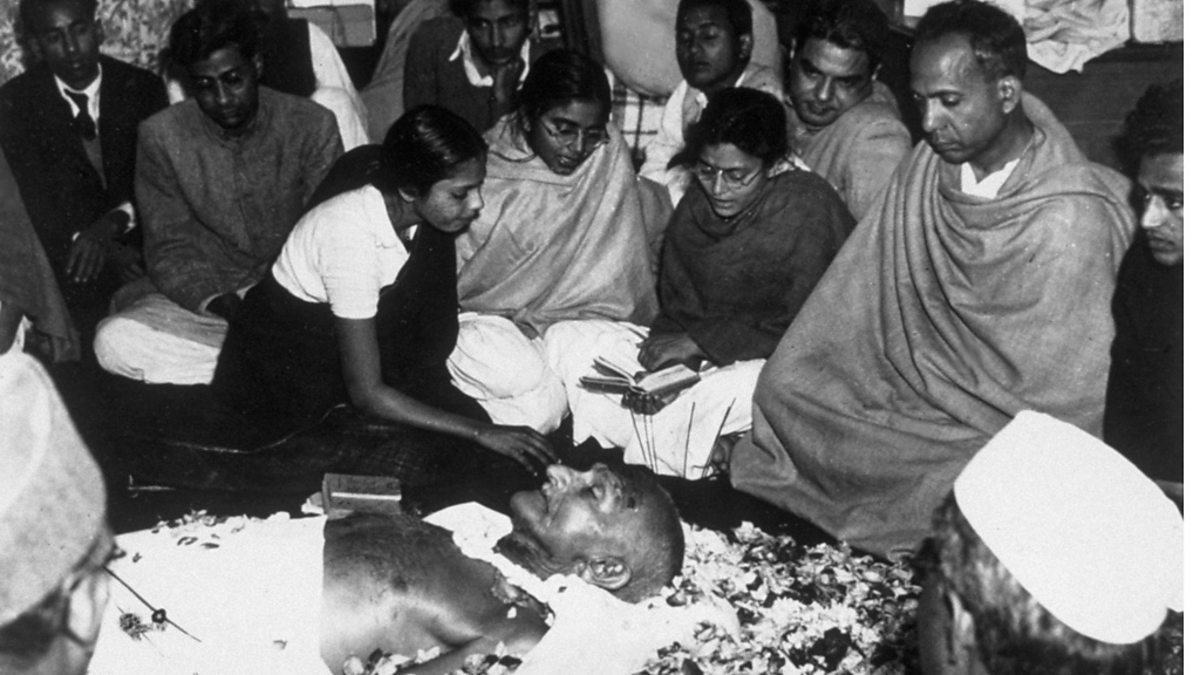
In the case of the assassinations of Indian leaders Mahatma Gandhi (1948), Indira Gandhi (1984) and Rajiv Gandhi (1991), people rallied around the assassinated leaders rather than the cause upheld by the assassins. Instead of sharpening the Hindu-Muslim divide, Mahatma Gandhi’s assassination by a Hindu fanatic strengthened secular India. Indira Gandhi’s assassination by her Sikh bodyguards to avenge the storming of the main Sikh shrine at Amritsar resulted in the massacre of thousands of Sikhs in Delhi and North India. Rajiv Gandhi’s killing by the Tamil Tigers led to the alienation of India from their cause in Sri Lanka, grievously injuring their separatist cause.
The assassination of Sri Lankan leaders SWRD Bandaranaike, R.Premadasa, Gamini Dissanayake, Lalith Athulathmudali, Ranjan Wijeratne, Vijaya Kumaratunga and Lakshman Kadirgamar by the Tamil Tigers only increased the resolve of the State to fight the LTTE.
The slaying of moderate Tamil leaders A. Amirthalingam, Sivasithambaram and Nilan Thiruchelvam failed to blunt the moderates’ ardour to work for a negotiated solution to the Tamil question.
These reactions proved that an assassination does not always create a vacuum which the assassin’s cause can fill. Any vacuum is immediately filled by the system that is injured. The assassinated leader’s position is immediately filled, and the fight goes on even more vigorously. The attacked system actually gets fired up to the dismay of the assassin.
However, even this is not guaranteed. There are cases that strengthened the assassin’s cause. For example, when Abraham Lincoln was killed for his anti-slavery agenda, the cause of the assassin was served by Lincoln’s successor, Andrew Johnson, who promoted anti-Black policies. However, Lincoln’s agenda was eventually accepted by Americans, though only after a century of struggle by the Blacks.
The system prevailing in the attacked society matters. Venezuela gave in to US aggression because President Maduro’s rule was corrupt and dictatorial. The Islamic regime in Iran survived because it was a deep-rooted organisation and ideologically strong. The US and Israeli intelligence services were grossly ill-informed. So, their assassinations bombed.
Jan Erola, in his paper “Is it Worth the Shot? How Assassinations Affect Politics and War”” in the “Nordic Defence Review”, discusses the issue in-depth and with a historical perspective.
The first well-known historical political assassination was that of Julius Caesar in 44 BCE by Roman senators. This act is often cited as a critical point leading to the end of the Roman Republic and the rise of the Roman Empire, Erola says. But the greatest impact of an assassination was that of Archduke Ferdinand of Austria in 1914, which triggered World War I.
In contrast to the relative calm of the 18 th century, the 19 th saw a slew of assassinations. Nearly every major European ruler and head of state faced assassination attempts. These included Emperor Franz Joseph of Austria, Kaisers Wilhelm I, Friedrich III, and Wilhelm II of Germany, Tsars Alexander II, Alexander III, and Nicholas II of Russia, Kings Victor Emmanuel II, Umberto I, and Victor Emmanuel III of Italy. Queen Victoria famously survived seven assassination attempts during her long reign, while her husband, Prince Albert, and the future kings of England, Edward VII and George V, were also targeted, as was Otto von Bismarck of Germany in 1866.
Assassinations marked American politics, too. The killing of President Abraham Lincoln in 1865 was a hallmark of the 19th.The century for its impact on civil rights in the US. Other US Presidents who were assassinated were James Garfield in 1881, William McKinley in 1901 and John F. Kennedy in 1963.
The two decades between World War I and II were turbulent, marred by numerous killings of political leaders, not to mention failed attempts. The Germans planned to assassinate Joseph Stalin, along with British PM Winston Churchill and the US president F.D. Roosevelt, in Yalta in 1943, but failed. Stalin assassinated Lev Trotsky, his rival in 1940 in Mexico City.
The first two decades after World War II were characterised by a limited number of political assassinations. Mahatma Gandhi was killed in 1948, Pakistan Prime Minister Liaquat Ali Khan in 1951, Ceylonese Prime Minister SWRD Bandaranaike in 1959 and Swedish PM Olof Palme in 1986. Sri Lankan leader Ranjan Wijeratne was killed in 1991, followed by President R. Premadasa in 1993, Lalith Athulathmudali in 1993, and Gamini Dissanayake in 1994. Israeli PM Yitzak Rabin was assassinated in 1995. The Pakistan Prime Minister Benazir Bhutto was assassinated in 2007.
There have been failed attempts, too. The best-known failed attempt was the plot to kill Hitler on July 20, 1944. There had been 42 attempts to kill Hitler from 1932 to 1944. There were 634 attempts by the CIA to kill Cuba’s Fidel Castro. According to Jan Erola, the CIA attempted to kill Indian PM Nehru in 1955. Ayatollah Khomeini was targeted in 1982. Trump faced an assassination attempt in July 2024 before he became President.
Results of Assassinations
US President William McKinley’s 1901 assassination brought Theodore Roosevelt to the presidency, who pursued more progressive domestic policies and an assertive foreign policy. McKinley’s assassination accelerated US imperialism. He had initiated the construction of the Panama Canal and pushed for increased involvement in Latin America.
John F. Kennedy’s assassination in 1963 created an atmosphere of heightened tension and uncertainty. Lyndon B. Johnson inherited Kennedy’s policies in Vietnam and escalated US involvement. The US intensified the economic embargo against Cuba,further isolating Cuba under Fidel Castro. However, Johnson’s persistence in Vietnam yielded no results. Dejected, he said he would not contest again.
The assassination of Yitzhak Rabin in 1995 was a significant setback for the Israeli-Palestinian peace process, demonstrating how the death of a key leader can derail peace efforts. President Bill Clinton, a key figure behind the Oslo peace process, speculated that peace could have been achieved within three years if Yitzhak Rabin had not been assassinated.
The assassination of Olof Palme, Sweden’s Prime Minister, in 1986, rattled Swedish society. Known for his bold and often controversial stances on international issues, Palme’s death not only left a void in Swedish politics but also prompted subtle yet significant shifts in Sweden’s foreign policy. Despite these shifts, Sweden continued to champion human rights and global justice, albeit in a more restrained manner.
Donald Trump became emboldened after surviving an attempt on his life in July 2024. Italy’s Benito Mussolini was shot by a lady in 1926, but the bullet only grazed his nose. Mussolini used this and other attempts to his advantage, portraying himself as a survivor and a symbol of Italian resilience. These incidents allowed him to justify the implementation of stricter security measures and further consolidate his power. The attempted assassination did not serve the assassin’s cause.
Cuban leader Fidel Castro became more and more defiant against the United States after surviving hundreds of attempts on his life by the American secret service. While the US achieved short-term geopolitical objectives, its actions have largely led to resentment against Americans.
Overall, the weapon assassination is like a double-edged sword – it can cut both ways. Unless used intelligently and after a careful analysis of the victim to be, it could damage the cause of the assassin, whether the perpetrator is an individual or a State.
END
,
