
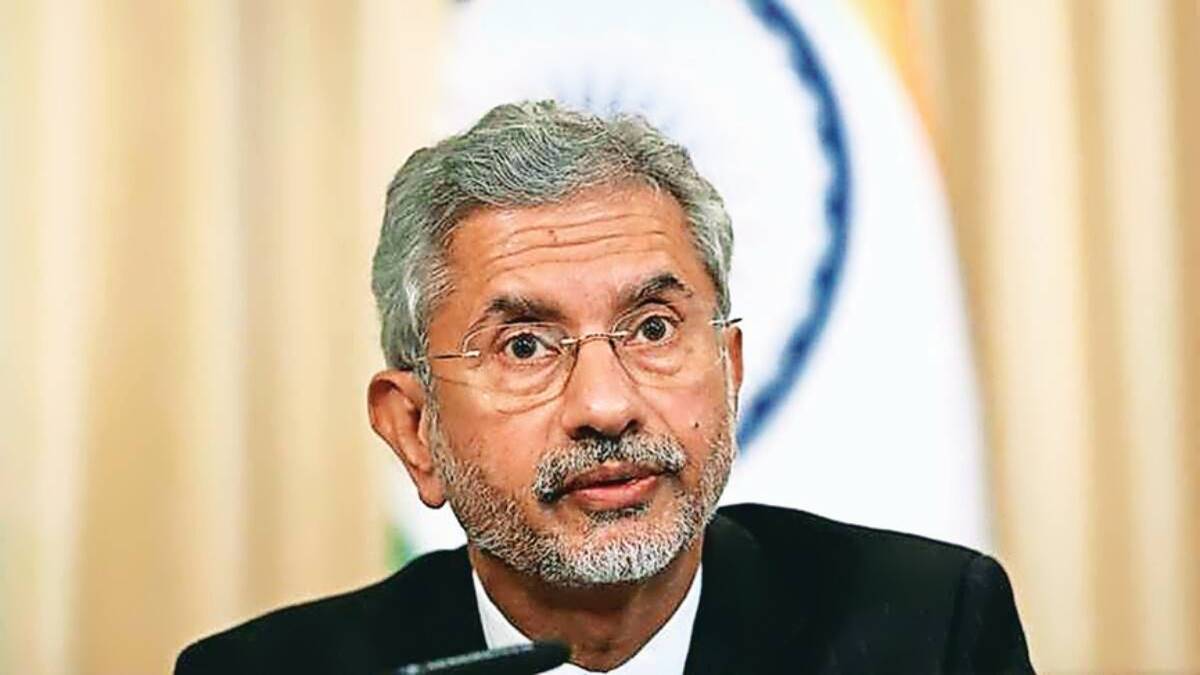

P.K.Balachandran /The Daily Times of Bangladesh
Colombo, March 27 – India’s External Affairs Minister, S.Jaishankar, told an all-party meeting on the Iran-US war earlier this week that India is not a “broker” (dalaal) to do the kind of work that Pakistan is doing to get Iran and the US to the negotiating table.
“India is not a dalaal nation like Pakistan’, Jaishankar said, countering the Opposition’s charge that India has been doing nothing to bring the war to an end using its links with both the US and Iran. India had yielded space to Pakistan, a country with less diplomatic capabilities than India.
Pakistan has emerged as a potential host for negotiations between the US and Iran, with US President Donald Trump seeming to endorse Islamabad’s role. Opposition members pointed out that India has never been as isolated in the world as it is now.
Congress leader Tariq Anwar criticised the Bharatiya Janata Party (BJP) government, saying that Pakistan appeared to be playing mediator while “we are still mute spectators.” He called for a full debate in parliament.
But Jaishankar said that there is “nothing new” about Pakistan’s role, as that country has been “used” by the US since 1981. Islamabad is not a genuine mediator but is only an agent of the US to carry its messages to Tehran and vice versa.
Denying that India has been sitting on the sidelines, Jaishankar said that Prime Minister Narendra Modi had conveyed to US President Donald Trump that the war must end soon, stressing that the ongoing conflict is hurting all sides. He also dismissed Opposition claims that New Delhi had been silent on the crisis and said it has been “commenting and responding.”
Jaishankar held that the government has been following due protocol. When the Iranian embassy was opened, the Foreign Secretary, Vikram Misri, visited it immediately and signed the condolence book, countering allegations of a delayed and weak response over the killing of Iran’s Supreme Leader Ayatollah Ali Khamenei in a US-Israel strike.
Dalaal Jibe Angers Pakistanis
Jaishankar’s ‘dalaal’ jibe triggered outrage in Pakistan. The Indian minister’s remarks were seen as a mark of Hindu chauvinism vis-àvis-Pakistan as a country and Muslims as a community. According to a report in the daily Dawn, Defence Minister Khawaja Asif said that Jaishankar’s remarks reflect his “personal frustration”.
The spokesperson of President Asif Ali Zardari, Murtaza Solangi, suggested that Jaishankar was “infected with a self-destructive virus” and added that he “lost everything he had learnt in the diplomatic school.”
Ex-Sindh governor and former minister Mohammad Zubair called out Jaishankar for “stooping low” and suggested that India is “frustrated” since it is not playing any role in the US-Iran conflict. Former Pakistani minister Khurram Dastgir Khan described the language used by Jaishankar as “reprehensible” and said that Pakistan was the nemesis to the Hindutva hubris in the May 2025 war and remains so.”
Rana Ihsaan Afzal Khan, Pakistan Prime Minister Shehbaz Sharif’s coordinator, said that while Pakistan is “delivering”, India is just paying lip service and is “sitting on Israel’s lap”. Pakistani Journalist
Gharidah Farooqi called the remarks “bizarre” and said India was “frustrated and isolated.”
Former Iranian diplomat Mehrdad Khonsari told Asia One TV channel that Jaishankar’s remark was “unhelpful and disingenuous”. He argued that India should be happy that Pakistan is joining the efforts of many countries to end the war as India itself is heavily dependent on the restoration of peace and the opening of the Strait of Hormuz for its energy supplies.
Michael Kugelman, Director of the South Asia Institute at the Washington-based Wilson Centre, endorsed Pakistan’s role and said that it is in Pakistan’s interest to take steps to help end the war, which may well reach its doorsteps.
“And for all the talk of the possibility of Pakistan invoking its pact with the Saudis…Pakistan, being located right on the war’s doorstep, clearly would prefer to take steps meant to help end the war, and not get dragged into it,” Kugelman said in a post on X. The mutual defence agreement between Pakistan and Saudi Arabia, signed last year, states that “any aggression against either country shall be considered an aggression against both”.
Adam Weinstein, deputy director of the Middle East program at the Quincy Institute, told Reuters, “Pakistan has unusual credibility as a mediator, maintaining workable ties with both Washington and Tehran, while a history of strained relations with each gives it just enough distance to be seen as a credible go-between.”
Pakistan’s Offer to Host Talks
Pakistan has been engaged in active diplomacy to help end the Iran conflict since it started, including shuttling at least half a dozen messages between the US and Iran. Security sources told Reuters that Pakistan was bound by the Saudi pact but was working to avoid entering the conflict through its backchannel talks with Tehran.
Pakistan Prime Minister Shehbaz Sharif formally pitched Islamabad as a potential venue for negotiations between Iranian and US officials. “Subject to concurrence by the US and Iran, Pakistan stands ready and honoured to be the host to facilitate meaningful and conclusive talks for a comprehensive settlement of the ongoing conflict,” he wrote on X, tagging US President Donald Trump, Iranian Foreign Minister Abbas Araghchi and US Special Envoy Steve Witkoff.
While there was no official word on whether the offer was Pakistan’s own initiative, sources privy to discussions said that the request that Islamabad host talks between the two warring sides had come from Washington.
However, Iran’s Foreign Minister Abbas Araghchi made the distinction between direct and indirect engagement clear, saying that an exchange of messages through “mediators does not mean negotiations with the US”.
Douglas Macgregor Favours Indian Mediation
Retired US Army Colonel and geopolitical commentator Douglas Macgregor has sharply criticised Pakistan’s offer to mediate in the ongoing Iran war, calling it “ludicrous nonsense” and questioning Islamabad’s credibility on the global stage. In an interview with ANI, Macgregor argued that Pakistan’s internal instability and economic challenges make it an unlikely peace broker. “For the Pakistanis to offer help is sort of like a man in a burning building offering you a spare room,” he said, dismissing the proposal outright.
He further noted that Israel would not view Pakistan as a neutral party, but rather “part of the problem,” making any negotiations hosted in Islamabad unrealistic. “If the Israelis heard they were supposed to show up in Islamabad for talks, they’d laugh it off. Why should we trust anything those people say?” he added.
India’s Orientation
Jaishankar’s sharp jibe stems not so much from Pakistan’s overtaking India in West Asian diplomacy, but the perpetual feud between India and Pakistan over Kashmir and cross-border terrorism. Describing Pakistan as an exporter of terrorism is standard fare in India’s diplomacy, and isolating Pakistan is its primary goal, especially since Modi came to power in 2014.
Lying at the root of the obsession with Pakistan is the Hindu- Muslim conflict within India, which is spurred by the Hindu nationalist Bharatiya Janata Party (BJP) government since it came to power in 2014. Hindu-Muslim tension is created to win elections. Conflicts and wars with Pakistan help sharpen the Hindu-Muslim divide. In times of communal tension, Muslims are asked to “go to Pakistan.”
Jaishankar’s derogatory remarks on Pakistan’s mediatory or facilitator’s role in the diplomatic efforts to end the US-Iran war are but a reflection of the basic tenets of New Delhi’s Pakistan-centric foreign policy.
END
