

By P M Amza/Colombo Telegraph
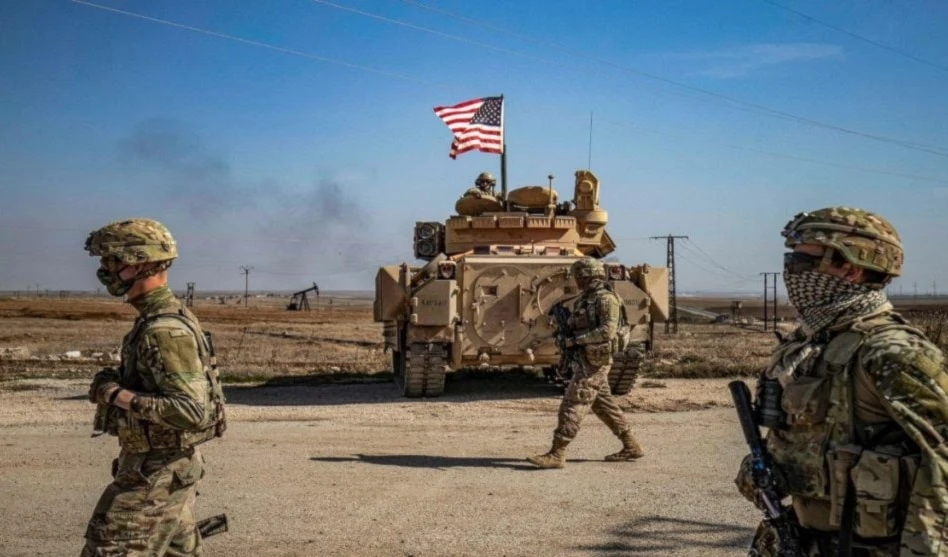
Colombo, March 26 – The prospect of a United States ground war in Iran, once viewed as improbable, is now part of serious strategic debate. As tensions escalate across the Gulf and military operations deepen, the central question is no longer whether the United States can prevail militarily, but whether such a scenario can be translated into a sustainable political outcome.
History offers a sobering lesson. Great powers rarely falter through sudden battlefield defeat. More often, they encounter a gradual convergence of pressures—military, political, economic, and psychological—that ultimately constrain their ability to achieve their objectives. The risk in Iran lies precisely in this dynamic: not a decisive loss, but a prolonged and costly entanglement.
A More Resilient Adversary
Iran represents a fundamentally different challenge from previous theatres of U.S. intervention. Unlike Iraq in 2003 or Afghanistan in 2001, Iran combines a strong sense of national identity with deeply entrenched state institutions.
At the core of this structure is the Islamic Revolutionary Guard Corps (IRGC), which functions not only as a military organisation but also as a political and economic force embedded within the state. This integration makes Iran far less vulnerable to rapid collapse following external military pressure.
Geography further complicates the strategic landscape. Iran’s vast territory, mountainous terrain, and urban density would transform any ground invasion into a prolonged campaign. Even if initial objectives are achieved, sustaining control would present a far greater challenge.
Military Superiority—and Its Limits
There is little doubt that the United States possesses overwhelming conventional military superiority. Its dominance in air power, intelligence, and logistics would likely ensure rapid success in the early stages of any conflict.
Yet contemporary warfare is rarely decided by initial victories. The more difficult task lies in converting military gains into lasting political stability. It is precisely at this stage that past interventions have encountered their greatest difficulties.
Iran’s strategy is rooted in asymmetry. Rather than seeking direct confrontation, it is structured to impose costs over time—through regional networks, proxy forces, cyber operations, and disruption of critical infrastructure. Analysts warn that such a conflict could quickly expand into a broader regional confrontation, involving multiple fronts beyond Iran itself.¹
Echoes of Vietnam
The most instructive historical parallel for the United States may be the Vietnam War.
In Vietnam, the United States enjoyed overwhelming military superiority. It controlled the airspace, deployed advanced technology, and prevailed in most conventional engagements. Yet the conflict evolved into a war of endurance rather than decisive battles.
A key factor was the absence of clearly defined and achievable objectives. As analysts have noted in the current Iran context, unclear goals can transform conflicts into prolonged and costly engagements.² In Vietnam, this ambiguity made victory difficult to define and ultimately unattainable in practical terms.
Equally important was the erosion of domestic political support. As casualties mounted and the war extended without clear progress, public opinion shifted decisively. The outcome was shaped not by battlefield defeat, but by the limits of political sustainability.
A ground war in Iran risks following a similar trajectory. Faced with an adversary capable of avoiding decisive confrontation while imposing continuous costs, the United States could find itself engaged in a conflict where the central challenge is not how to win, but how to disengage.
Domestic Constraints and Political Will
Modern warfare is sustained as much by domestic political conditions as by military capability. Public support, economic resilience, and political consensus are essential to sustaining long-term military engagement.
In the United States, recent history demonstrates a clear pattern: prolonged wars with rising casualties tend to erode public backing. The legacy of Iraq and Afghanistan has reinforced a degree of caution among both policymakers and the public.
Even in the early stages of the current Iran conflict, questions have emerged regarding its legal basis and strategic rationale, reflecting broader concerns about the sustainability of such a war.³ If these uncertainties persist, they could weaken political support over time.
Economic Consequences and Global Impact
A conflict involving Iran carries immediate global economic implications. Iran’s proximity to the Strait of Hormuz—through which a significant share of global oil supply passes—gives it the capacity to disrupt energy markets.
Recent developments have already demonstrated this vulnerability. Oil prices have risen sharply, and analysts warn that prolonged instability could undermine economic growth and disrupt global supply chains.⁴ In extreme scenarios, a wider regional war could trigger even more severe economic consequences.
For the United States, such pressures would translate into domestic economic strain, further complicating the political sustainability of a prolonged conflict.
Strategic Overreach in a Multipolar World
The broader strategic context also matters. The United States is operating in an increasingly complex global environment, where competition with other major powers continues to evolve.
A prolonged ground war in Iran would require sustained attention, resources, and political capital. This could limit U.S. flexibility in other regions, altering the broader balance of power.
At the same time, the conflict has already exposed emerging divisions among allies and raised questions about the legitimacy of the intervention.⁵ Such dynamics could further complicate the strategic environment in which the United States operates.
Conclusion: The Risk of a War Without End
A ground war in Iran, if it materialises, would represent one of the most consequential strategic decisions of our time. It would test not only the military capabilities of the United States but also the broader limits of power in a complex and interconnected world.
The United States may well achieve rapid and decisive success in the opening phases of the conflict. It may degrade Iranian capabilities and demonstrate overwhelming force. But the more critical question is whether these gains can be translated into a stable and sustainable political outcome.
If history offers any guidance, the answer is uncertain.
The experience of Vietnam illustrates that military dominance does not guarantee strategic success. When objectives are unclear, resistance is adaptive, and political will is finite, even the most powerful states can find themselves drawn into conflicts that prove difficult to conclude.
In this sense, the greatest risk in Iran is not defeat in the conventional sense, but entrapment in a conflict where success becomes increasingly difficult to define—and even harder to achieve.
The author is a former Sri Lankan Ambassador in many countries, including Saudi Arabia)
END
