

By Fazeena Saleem/The Peninsula
Doha, March 15 – France has reaffirmed its strong strategic partnership with Qatar, highlighting deep diplomatic ties, and the defence dimension of the partnership has taken on heightened importance as the region navigates a complex geopolitical situation.
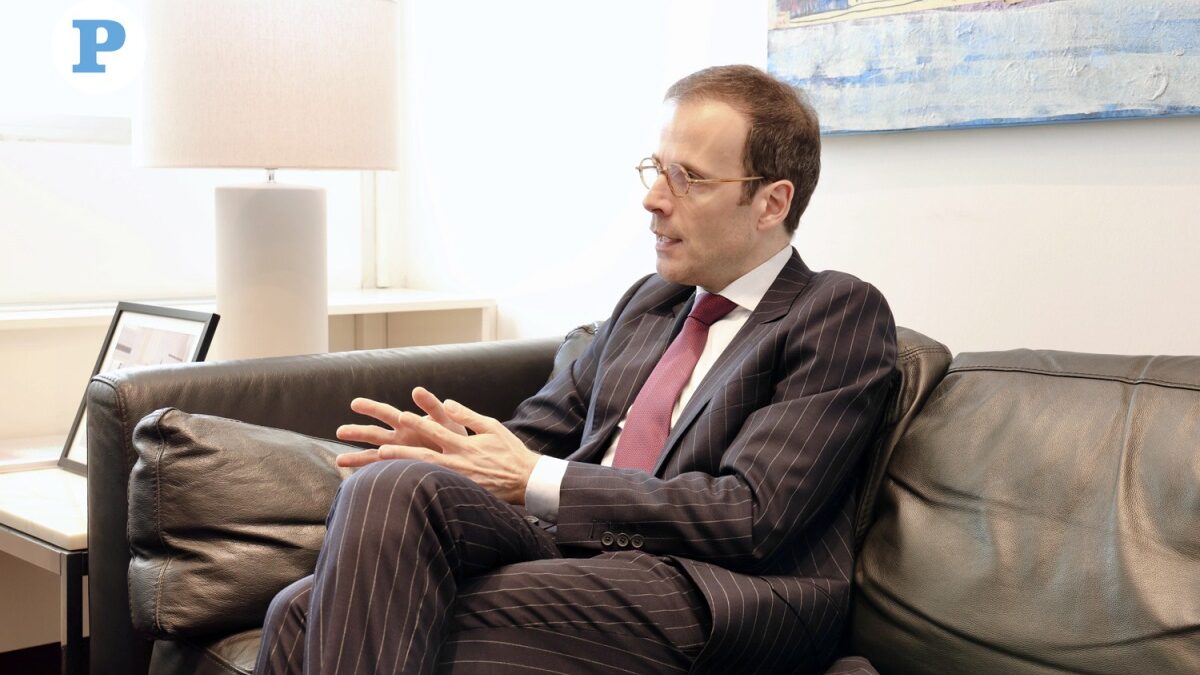
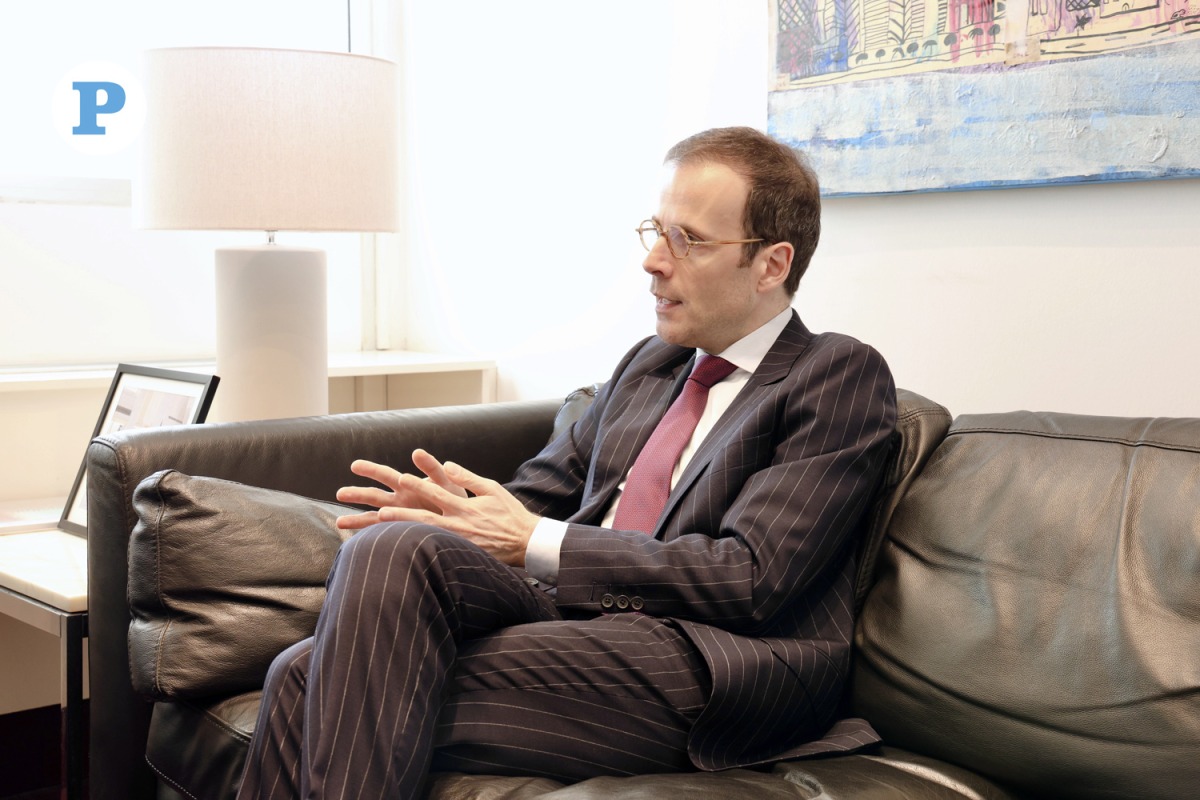
In an exclusive interview with The Peninsula yesterday, the Ambassador of France to Qatar H E Arnaud Pescheux, reflected on the long-standing relationship between the two countries, describing France as a strategic partner committed to being “reliable, predictable, and determined” in supporting Qatar during challenging times.
The envoy noted that the partnership between the two nations dates back to the early years of Qatar’s independence and has steadily evolved over the past five decades, expanding across a wide range of sectors. “It is considered a strategic partnership, meaning that France views Qatar as a strategic partner and Qatar views France the same way. There is almost no field of cooperation missing,” he added.
However, amid the current geopolitical tensions, the defence dimension of the partnership has taken on major focus. “Right now, the aspect of the partnership most activated by the current context is the military and defence cooperation,” Ambassador Pescheux said. “We have a defence agreement with Qatar, which means that if Qatar requests support to defend itself, we can intervene.”
He explained that France responded at the very beginning of the crisis following a request from Qatar.
“At Qatar’s request, and in a proportionate and defensive manner, we deployed defence military resources to the region to support Qatar in its defence,” he said.
The ambassador also highlighted the significance of swift high-level diplomatic contacts between the leadership of both countries during the early stages of the crisis; the initial phone call took place between the Amir H H Sheikh Tamim bin Hamad Al-Thani, and the President of France H E Emmanuel Macron, within the first hours of the developments.
“Since then, contacts have continued regularly,” he said, adding that exchanges between the leaders as well as discussions among defence, foreign affairs and finance ministers of both countries.
“There is ongoing coordination between France and Qatar, as it should be between strategic partners,” he said, adding that the discussions focus on how France could support Qatar.
Ambassador Pescheux said discussions currently focus on two main aspects: military support, diplomatic engagement, and coordinated international efforts to de-escalate tensions.
“The first is military support, how France can support Qatar’s defence and what military resources our Qatari friends may need,” he said.
At the same time, the ambassador stressed that both countries view diplomacy as the only viable path to resolving the crisis.
“We do not believe a solution can be found through military action, and Qatar does not believe so either. We think the only solution is diplomatic,” he said.
He praised Qatar’s role as a global mediator and said France also seeks to play a constructive diplomatic role.
“Qatar is very active in mediation, and we very much value Qatar as a mediation power. France is what we call a balancing power,” he said.
Ambassador Pescheux acknowledged that both countries maintain channels of communication with a wide range of international actors, placing them in a unique position to help facilitate renewed dialogue.
As the crisis enters its third week, the ambassador acknowledged the complexity of the situation but emphasised the importance of perseverance in diplomacy.
Quoting the Italian philosopher Antonio Gramsci, he said, “You can be pessimistic by reason, but you must be optimistic by will.”
“This is the task of diplomats to remain optimistic by will and never give up,” Ambassador Pescheux said.
He pointed to the broader regional context, including military developments and tensions affecting the Strait of Hormuz, as well as the potential global economic impact on energy markets.
“Of course, we don’t have many reasons to be optimistic right now,” he said. “But we choose to remain optimistic by will because we believe it is our responsibility as a permanent member of the UN Security Council and as a country that wants to contribute to solutions.”
Ambassador Pescheux also outlined France’s recent defence deployments aimed at strengthening regional security and supporting its partners.
He said additional Dassault Rafale fighter jets had been deployed in the region to assist allies, including Qatar, in defensive operations.
“We also sent radars and air-defence systems to the region,” he added.
He further noted that the aircraft carrier strike group led by the French aircraft carrier Charles de Gaulle had been deployed to the eastern Mediterranean.
“This represents a strong display of solidarity but also a strong display of force by my country,” he said.
The French embassy is also maintaining close coordination with Qatari authorities to ensure the safety and well-being of the French community in the country.
“Our main entry point is the Ministry of Foreign Affairs, and we coordinate with them daily,” Ambassador Pescheux said.
He noted that around 6,000 French nationals reside in Qatar, while approximately 2,000 others were temporarily in the country when the crisis began.
“Most of those temporary visitors have now left the country, either through Riyadh or via flights departing from Doha,” he said.
The embassy communicates with citizens through direct contact, its official website and social media channels, while a network of community representatives also helps relay information.
Ambassador Pescheux also commended Qatar’s handling of the crisis, particularly the efforts of the country’s armed forces in protecting civilians and maintaining essential supplies.
“We feel a lot of admiration and recognition for the Qatari Armed Forces,” he said, adding that Qatar had effectively established a protective shield over the population.
“More than 90 percent of the missiles, fighter jets and drones targeting Qatar since February 28 have been intercepted by the air-defence systems,” he said.
“As a result, there have been no fatalities and around 26 injuries,” he added, noting that the country has also maintained uninterrupted supplies of food, water and other essentials.
While acknowledging that it may be too early to fully assess the long-term implications of the crisis, the ambassador said France and Qatar remain committed to strengthening their cooperation.
“The potential between France and Qatar is enormous, and we are more than willing to continue developing our partnership once circumstances allow.”
Ambassador Pescheux concluded with a message to the French community and businesses in Qatar, saying, “Stay calm, remain as resilient as you have been so far, and stay confident in Qatar and in its ability to protect you.”
END
