

By Trivan Annakkarage
Colombo, February 26 – Settlements in the contiguous country of Israel and the non-contiguous country of Palestine – comprising East Jerusalem, Gaza Strip and West Bank date before civilisations in neighbouring Iraq (Mesopotamia) and Egypt. Israel-Palestine is located in the Fertile Crescent.
Hence, Israel and Palestine are indeed blessed with offshore natural gas and Dead Sea minerals – magnesium, potash, bromine and salt – in addition to essentials including surface water, aquifers and fertile land.
The geo-strategic advantage of being a junction connecting the three continents – Asia, Africa and Europe, has resulted in its population being governed (either directly or indirectly) by a series of foreign empires from Ancient Egypt (since 1500 B.C.) to the British Empire until 1948.
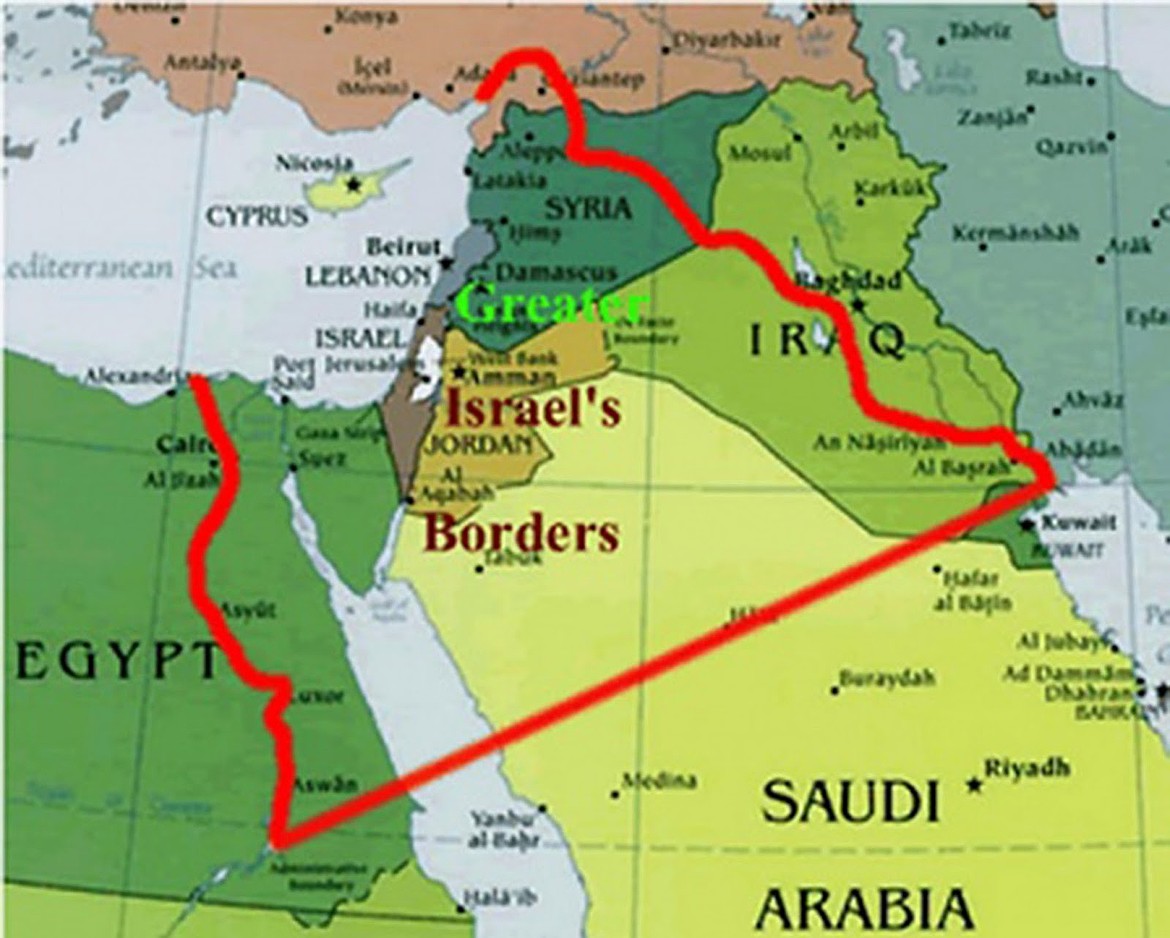
In the Torah and Bible, Genesis 15:18 mentions a promise from God to Abraham. It reads that God gifted the land from the Nile to the Euphrates Rivers to establish a homeland. Historically, a nation-state encompassing this territory never materialised even at the height of Jewish Kingdoms (circa 1100-931 B.C) However, scholars argue that Genesis was written centuries after the events it describes thus questioning its accuracy.
Moreover, this reference has no standing in modern international law because the ICJ and the United Nations (UN) do not recognise theological claims as a basis for sovereignty. On the contrary, Zionist and Christian evangelical movements interpret Genesis 15:18 literally.
The century-long conflict between Israel and Palestine is rooted in ethno-religious divisions, and this prolonged hostility has complicated their rivalry.
This article will focus on the injustice faced by Palestinians from being denied access to their natural resources due to the ongoing unlawful settlement in their territory by Israel, especially via the ‘Apartheid Wall’ in the West Bank, followed by land, maritime and aerial blockades surrounding the Gaza Strip. Since Israel’s actions defy Article 33 of the Fourth Geneva Convention, successive governments have faced notoriety as enforcing an apartheid in Palestine.
The West Bank and East Jerusalem possess large mountain aquifers. They are essential for drinking water and for fertile land to produce olives, grapes and almonds. Unfortunately, Israeli settlements in the West Bank – declared illegal by the above ICJ Advisory Opinion – have deprived Palestinians of water. This is because Israel controls 80% of the West Bank’s water reserves and diverts them toward Jewish settlements. The current status followed Israel’s triumph in the 1967 Six-Day War. Palestinians have since been restricted from drilling into aquifers and collecting rainwater, thus leaving them no choice but to purchase water from Israel’s national water company, Mekorot.
The West Bank possess limestone, dolomite and Dead Sea minerals. Oslo Accord II of 1995 divided the West Bank into three sections – A, B & C – and the agreement stipulated a phased withdrawal of Israeli settlements from Area C (which accounts to 60% of the territory) within five years and to transfer its administrative powers to the Palestinian Authority.
However, this never materialised. Therefore, Israel has granted concessions to Jewish companies to extract these resources, and profits have flown almost exclusively to Israel while barring Palestinians from doing the same.
Since Dead Sea Minerals lie within Area C, Palestinians are denied their right to access and benefit from those resources.
The Gaza Strip has the offshore natural gas field, ‘Gaza Marine’ in the Mediterranean with reserves of over 201 billion Barrels of Oil Equivalent (32 billion m3 ). Unfortunately, Israel’s maritime blockade since 2007 has prohibited Palestinians from accessing it.
Adjacent Israeli fields such as Leviathan, Tamar, Karish and others – from which Israel utilises domestically and benefits via exports, are geologically linked to Gaza Marine.
Alarmingly, in 2024, Israel had allegedly issued exploration licenses to local and foreign companies in certain areas, infringing Palestinian maritime boundaries. Similar to Israel’s use of aquifers, the rule of capture applies here because there is a risk of Palestinians losing their natural gas.
Geo-strategically, due to the West Bank’s high-ground over-looking Israel’s coastal cities, Tel Aviv feels threatened.
In addition to water security, minerals and Biblical references, the vantage points in the West Bank could also be shown as a primary reason why Israel is hellbent on incorporating this territory.
As a result of Israeli settlements, it has been estimated that 2.5 million trees have been destroyed. The flora includes almonds, figs, grapevine, carob, hawthorn, citrus and banana which are central to Palestinian culture and livelihood.
Even more alarming is the uprooting of olive trees – some of which are considered to be 1,000-year-old.
Despite Israel’s ‘eco-friendly’ reputation, wastewater from its settlements in the West Bank is discharged into areas occupied by Palestinians –contaminating both air and water, leading to respiratory diseases and water-related illnesses. In spite of its occupation, Israel is not applying its domestic environmental safeguards in the West Bank.
Academics argue that Israel’s eco-friendly policies are just ‘greenwashing’ tactics and have phrased its actions as ‘Environmental Apartheid’.
Israel argues that harsh policies are applied to curtail terrorism. However, Human Rights Watch and Amnesty International have counter-argued that security justifications are a pretext for thrusting disadvantage on the Palestinians.
In 2019, the Office of the United Nations High Commissioner for Human Rights released a report mentioning the findings of its Special Rapporteur, Professor Michael Lynk, who described these policies as violations of Israel’s legal obligations as an occupier under international human rights and humanitarian law.
In spite of a US veto at the UN Security Council, there is a growing number of UN member-states establishing diplomatic ties with Palestine. Among them are the UK, France, Canada and Australia. At a time, American hegemony is challenged by its allies and emerging Asian powers, the possibility of implementing UN General Assembly Resolution 377, involving diplomatic sidelining and economic sanctions against Israel, cannot be ignored.
In International Relations, we are reminded that oppression fuels the cycle of violence and that with time, oppressors stumble on their own shadow.
END
The author Trivan Annakarage can be reached at trivan90@gmail.com
