

By Tang Lu/Substack
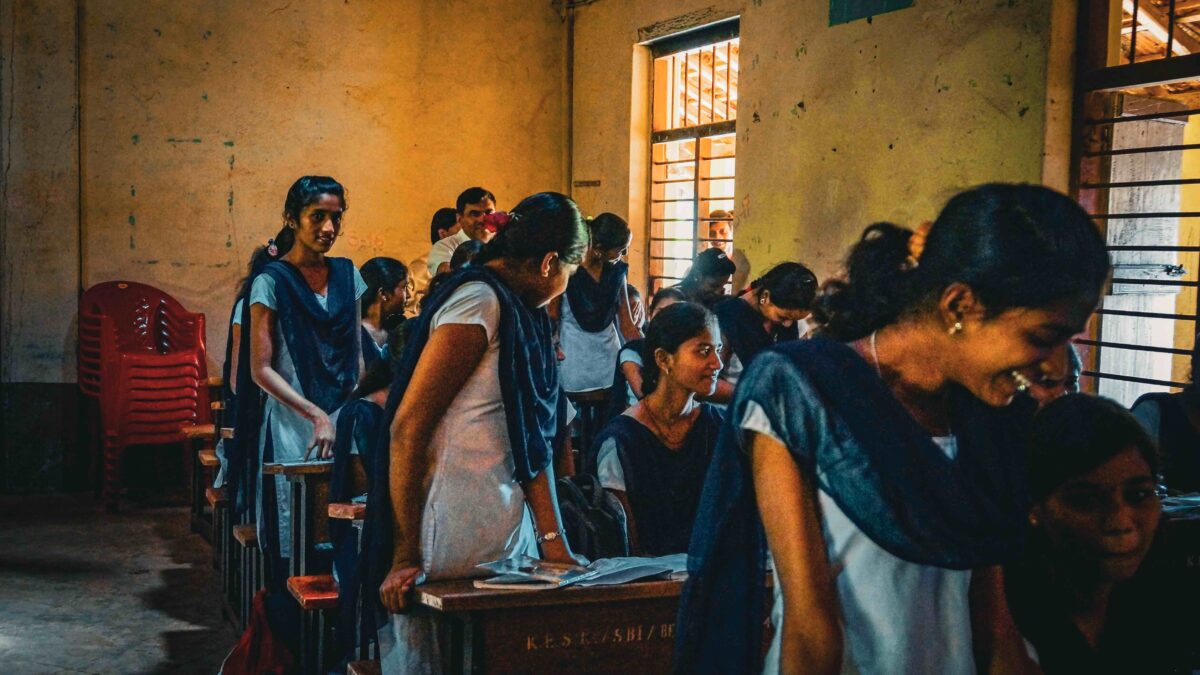
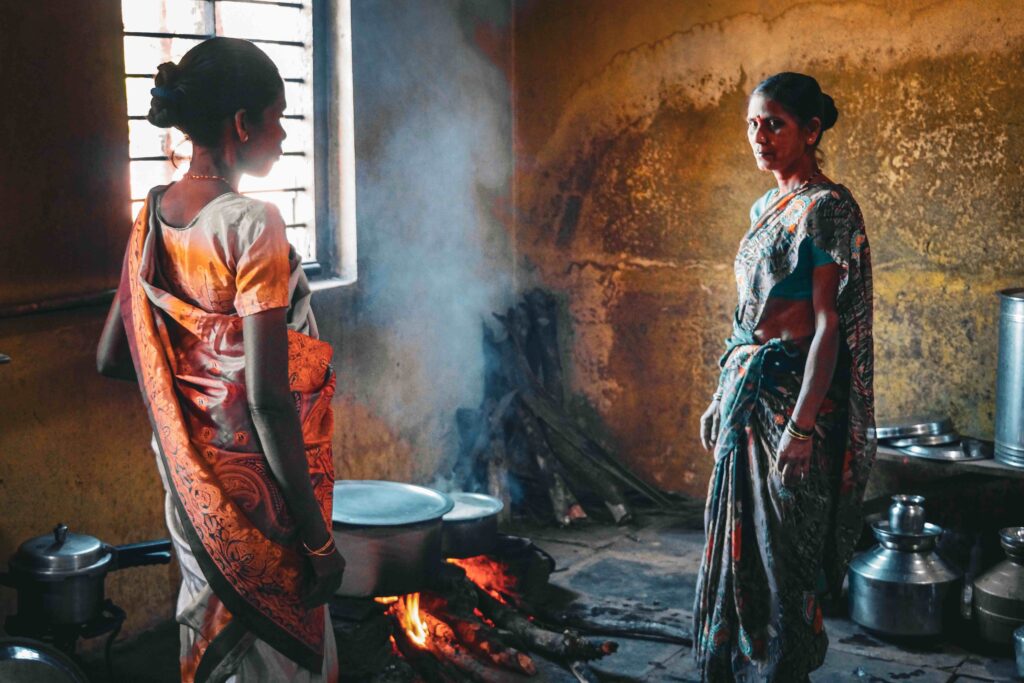
In a rural school in Maharashtra, western India, the air is thick with acrid smoke from burning firewood and the aroma of simmering lentil curry. Women wield long ladles through the haze while small figures strain under government-issued grain sacks. This is India’s public policy miracle captured through my lens—the Mid-Day Meal Scheme.
Every school day, roughly 120 million students aged 6 to 11 in India’s public schools receive a hot, free lunch—a world record by sheer numbers. For over two decades, this program has acted like a magnet, drawing hundreds of millions of children to their desks.
This program did not originate from government foresight but from a 2001 Supreme Court ruling (PUCL v. Union of India). Today, history is repeating itself. On January 30, 2026, India’s Supreme Court once again wielded its judicial power with a solemn declaration: menstrual health is part of the right to life. The Court mandated that all schools across India provide free biodegradable sanitary pads and gender-segregated toilets to female students, ensuring their dignity and right to education.
The justices emphasized: “Dignity cannot be reduced to an abstract ideal; it must manifest in enabling individuals to live free from humiliation, exclusion, or avoidable suffering… In this context, resource scarcity should not become a justification for denying women bodily autonomy.”
The Wall of Taboo: From “Rags and Ashes” to Photographic Humiliation
To understand the depth of this Supreme Court ruling, one must first grasp the brutal reality of India’s “period poverty.” For generations, discussing menstruation has been taboo; menstruating women are considered “dirty” and “impure,” often excluded from social and religious activities.
In impoverished areas lacking sanitary pads, girls are often forced to use old rags, sand, sawdust, or even ashes to manage their periods, leading to extremely high infection risks. Many schools lack functional toilets; girls must share facilities with boys or use doorless stalls.
Combined with the inability to afford basic menstrual hygiene products, one in five Indian girls drops out of school after menarche. Among those who continue, one in four misses classes during their periods due to fear of staining uniforms, lack of changing rooms, and absence of water and cleaning facilities—ultimately falling hopelessly behind. What prevents girls from attending school isn’t the weight of books but the pad they cannot change with dignity.
This systemic stigma is not confined to classrooms. In October 2025, a scandal erupted in Rohtak, Haryana: three female sanitation workers requesting menstrual leave were ordered by their male supervisor to photograph and send images of their sanitary pads as “proof.” This extreme humiliation epitomizes what the justices condemned as “systemic trampling of dignity” in their judgment.
A Contrast in Dignity: Why the Sun Shines Differently in Colombo
Writing this piece, I recalled a moment years ago in Sri Lanka that left me baffled. I had invited an elite friend from Colombo on a weekend outing, only to have him decline—a rare move that piqued my curiosity. Even more shocking was his solemn reason: he “absolutely, absolutely” must stay in Colombo for his daughter’s “Big Girl Party” (the kotahalu mangilya).
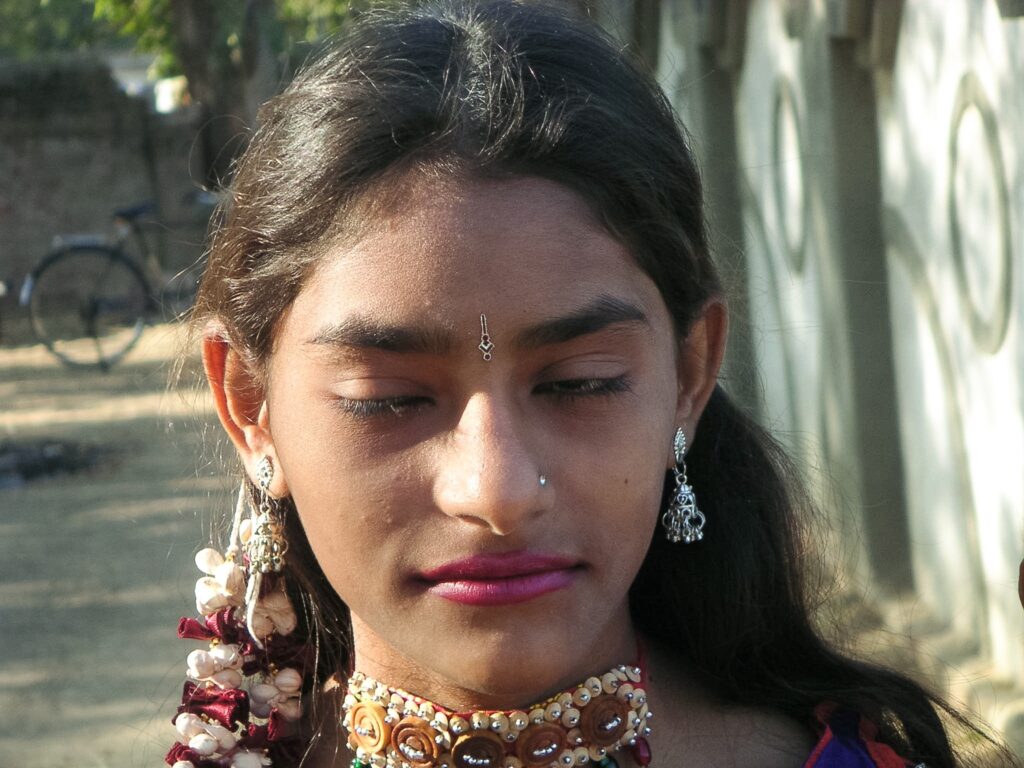
At first, I struggled to comprehend it. Why would a private biological milestone require such total family mobilization? I soon learned that in Sri Lanka, a girl’s first period is not a source of shame but a grand, public celebration. Fathers consult astrologers for auspicious timing, relatives shower the girl with gold gifts, and she dons her first expensive silk sari amid society’s blessings. In Colombo, menstruation is inscribed on astrological calendars as a family honor.
Fortunately, this celebration is not unique to Sri Lanka. It finds a deep echo across the Palk Strait in Southern India, where similar puberty rituals have existed for centuries. This shared Dravidian cultural heritage honors a girl’s transition rather than hiding it, so the progressive stance of Southern governments feels like a natural evolution of ancient values.
The Southern Consensus: Kerala’s Blueprint and Beyond
Against this cultural backdrop, it is hardly surprising that the South became the pioneer of menstrual rights in India. Records show that as early as 1912, the Tripunithura Government Girls’ School in Cochin (now Kerala) permitted students to take menstrual leave during annual exams.
Today, this legacy has evolved into a modern template for the entire nation. In 2017, the Kerala government launched the celebrated “She Pad” scheme, designed not just to provide supplies but to dismantle the very foundations of menstrual stigma, ensuring that hygiene facilities—or the lack thereof—would never again be a reason for a girl to drop out.
Under this scheme, female students in grades 6 to 12 across the state receive free sanitary pads. All schools are equipped with automatic vending machines for easy access, and to address environmental impact, the state installed industrial-grade, eco-friendly incinerators for safe disposal.
In Kerala, menstrual hygiene has been elevated to a fundamental right. Through systemic policies—from menstrual leave to free supplies and eco-alternatives—the state has broken ancient taboos and embodied a governance philosophy rooted in gender justice. This approach has directly contributed to Kerala’s leading enrollment and retention rates for girls, now standing as a replicable model for other regions.
This progress is now a collective “Southern Consensus.” According to Indian media reports, both Tamil Nadu and Karnataka have followed suit, launching programs to distribute free sanitary pads to schoolgirls. The results are quantifiable: data from Tamil Nadu indicates that these policies have significantly boosted adolescent girls’ enrollment rates by 5% to 10%.
The success of these southern states, led by Kerala, powerfully refutes the dismissive notion that “sanitary pads are trivial matters.” It proves that after solving hunger through the Mid-Day Meal scheme, addressing “period shame“ is the second major lever for elevating women’s educational rights in India.
The Supreme Court’s ruling on menstrual hygiene rights was not conjured from thin air but precisely modeled on the “Kerala experience.”
The Court’s Thunder: Four Years Behind the 2026 Ruling
Justice J.B. Pardiwala explicitly declared in the judgment: “Menstrual health rights are not merely sanitation issues but rights to life and dignity under Article 21 of the Constitution.” This ruling was no overnight achievement but the culmination of a four-year judicial marathon.
As early as 2022, social activist Dr. Jaya Thakur filed a public interest litigation demanding the government provide basic sanitary protections for female students. However, the judgment’s delay until 2026 reflects typical administrative dragging under India’s federal system: the central government repeatedly sought extensions citing “ongoing formulation of a national menstrual hygiene policy,” while state governments wrangled over “who pays for this.” This buck-passing reached a tipping point after the October 2025 Haryana scandal. In the final ruling, the justices no longer accepted “under study” excuses, instead imposing extremely specific requirements:
Universal Coverage
All government and private schools, whether urban or rural, must provide free, biodegradable sanitary pads to girls in grades 6-12 and establish separate gender-segregated toilets. Schools must also set up MHM (Menstrual Hygiene Management) Corners stocked with spare underwear and uniforms, disposable waste bags, and other essentials for menstrual emergencies.
Insisting on “Water Rights”
Addressing the chronic problem from the 2014 “Clean India” campaign where countless toilets became storage rooms due to water cutoffs, the judgment stipulates: toilets without functional water, soap, and privacy doors constitute violations, depriving girls of dignity.
Operating License as Enforcement
Private schools failing to comply face direct revocation of operating licenses. This tactic of exchanging “survival rights” for “operating rights” demonstrates the Indian judiciary’s firm stance when facing administrative inertia.
Total Societal Mobilization: The Role of Men
Notably, the Supreme Court’s judgment extended beyond the girls themselves, addressing India’s deep-seated social architecture. The justices called for “total societal mobilization,” explicitly emphasizing the role ofboys, fathers, and male teachers.
The Court reasoned that if male teachers and classmates continue to regard menstruation as “dirty” or “taboo,” then no amount of supplies can prevent a girl from dropping out due to shame. Consequently, the justices ordered the NCERT (National Council of Educational Research and Training) to incorporate menstrual health awareness into general education textbooks. This attempt to dismantle “invisible walls” in men’s hearts marks a new peak in Indian judicial intervention against social prejudice.
The “Last Hundred Meters” of Implementation: Who Will Turn That Rusted Tap?
While Kerala and Tamil Nadu’s successful models provide reference points, extending menstrual health rights across India’s 1.5 million schools is no less challenging than rebuilding oases in a desert.
From “Distributing Pads” to “Building an Ecosystem”: Following southern experiences, pads will be distributed through community health workers (ASHA) and teachers. But the challenge lies in the court-mandated “biodegradable” materials being far costlier than ordinary pads and requiring supporting waste incinerators. For villages in Bihar or Uttar Pradesh with extremely poor transportation, ensuring these supplies arrive on time without layer-by-layer skimming requires establishing massive transparent supply chains.
The Fatal Flaw of “Heavy Infrastructure, Light Operations India’s decade-long toilet revolution proved that building structures is easy; providing water is hard. Many village school pumps remain broken for years, or electricity cannot guarantee pumping. Especially in Bihar during drought seasons and villages in Uttar Pradesh with unstable power supply, the justices’ requirement for “functional water” means schools must have independent electric pumping and water storage systems. This is not merely about buying sanitary pads but a miniature rural infrastructure revolution.
The “Contempt of Court” Enforcement Ring
To prevent policy from devolving into a “numbers game,” the court deployed an unprecedented supervisory combination: the judgment requires establishing real-time online panels where each school’s menstrual supply inventory and facility status must be transparent; District Education Officers (DEOs) are designated as primary responsible parties. If a school’s tap doesn’t flow, the DEO will directly face court interrogation or even criminal penalties. The judges warned that the Union of India and all states and union territories must ensure strict compliance within three months. Non-compliance will bring severe consequences, including revocation of recognition for private schools and direct accountability of state governments for failures in public institutions.
Society’s Mosaic: Support, Anxiety, and Silent Resistance
Following the ruling’s release, women’s rights organizations erupted in celebration, viewing it as the greatest “judicial activism” victory since the 2001 free meal ruling. Indian social media also witnessed an outpouring of support. One netizen’s comment was particularly representative: “I want to thank the Supreme Court for establishing menstrual health rights as a fundamental right… This not only supports girls’ health but will boost their confidence. Let our girls become future changemakers.” People hope to see not just law enactment but states and union territories swiftly implementing this order.
However, grassroots administrators’ reactions are far more complex. For small self-funded private schools in Delhi or Mumbai suburbs, the monthly cost of biodegradable sanitary pads per female student, plus maintenance and cleaning fees for gender-segregated toilets, could directly consume a month’s meager profits. No wonder some private school principals expressed anxiety in anonymous interviews: “The government orders us to provide free supplies, but we bear all costs—this might lead to tuition increases.”
In conservative rural Uttar Pradesh, some male parents still feel uncomfortable about “openly discussing menstruation in schools,” worrying this “excessive education” will challenge traditional family values.
This temperature gap of “court enthusiasm, grassroots coolness” is the most authentic portrait of India’s modernization process.
The Historical Leap from “Stomach” to “Dignity”
Twenty years ago, the Supreme Court fulfilled its first promise with a bowl of hot rice—getting children in the door. Twenty years later, it’s attempting to fulfill its second promise with a pad and a toilet with running water—keeping girls in school.
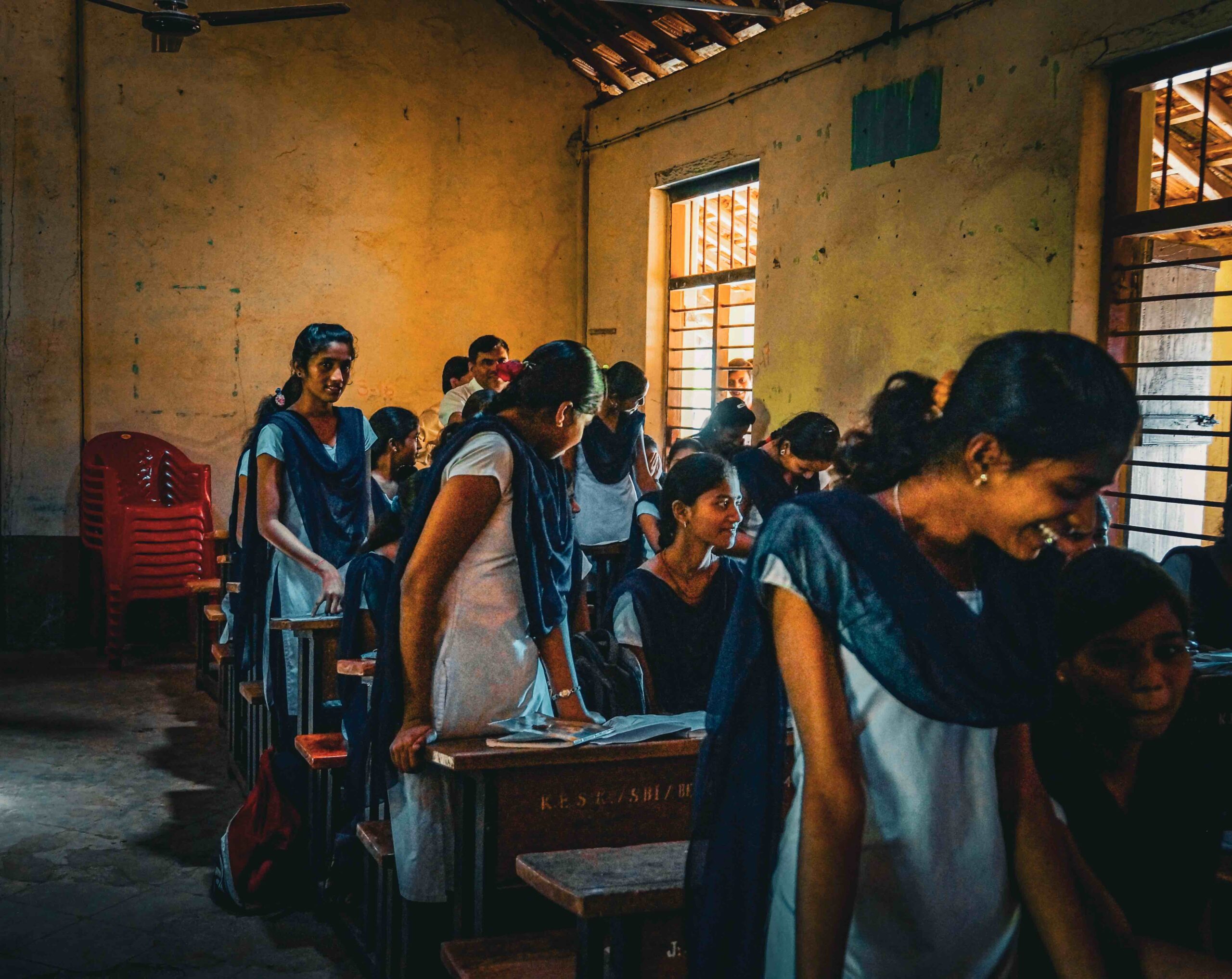
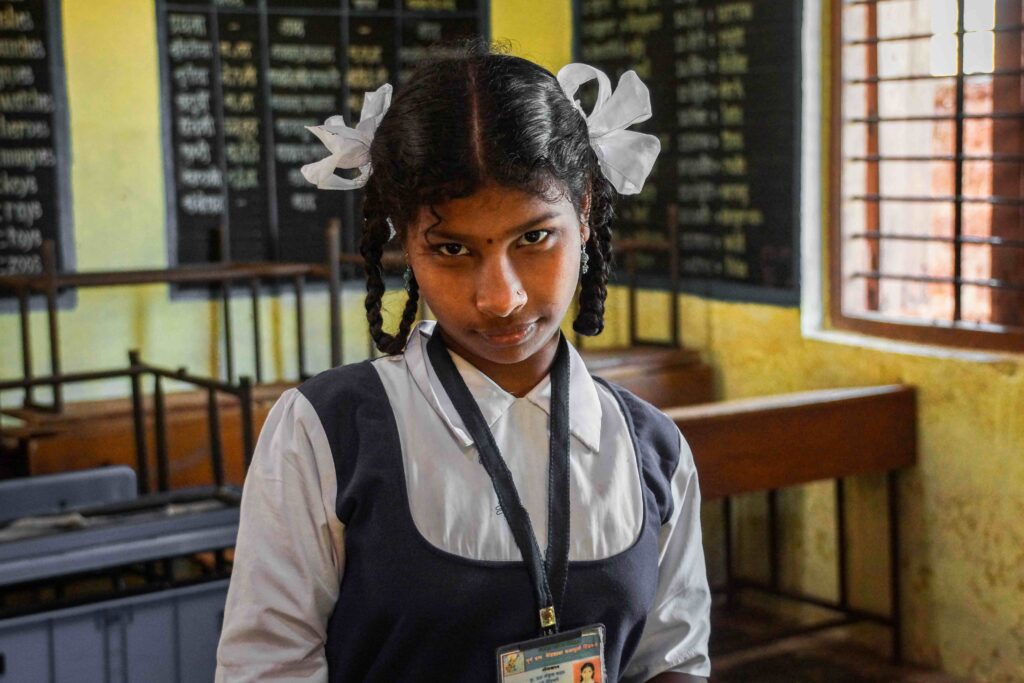
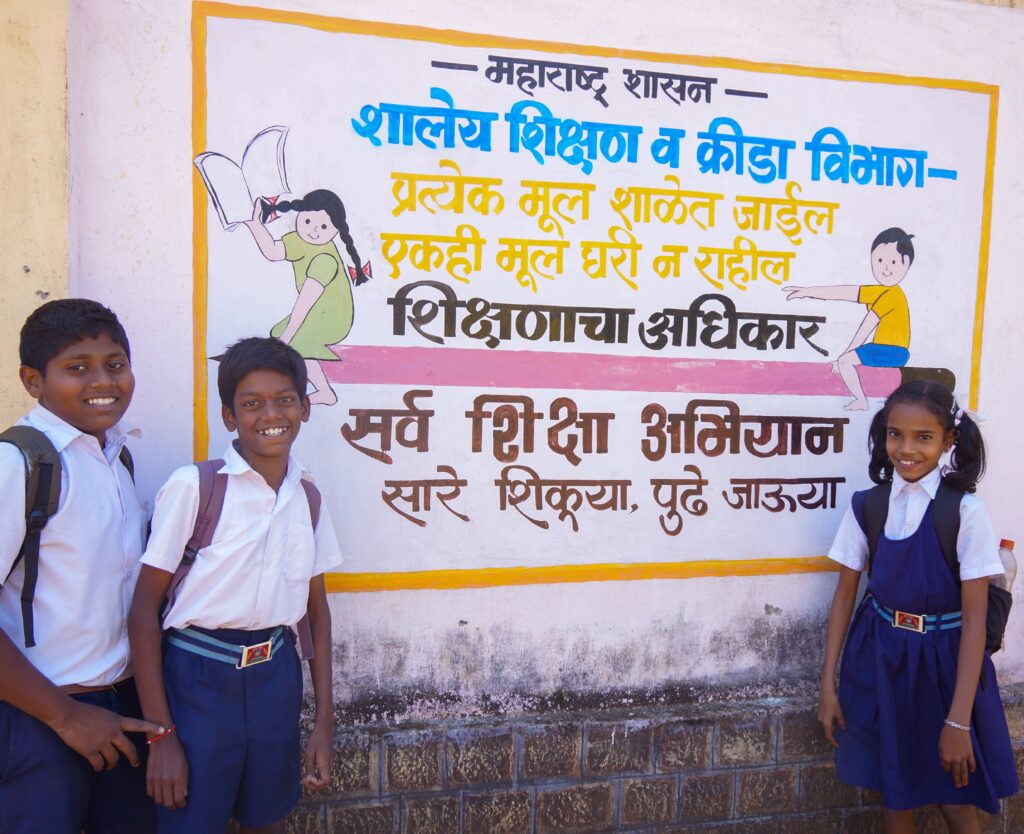
Like the sunlit classroom in my photograph, where the national anthem is written on the blackboard, the law attempts to dismantle invisible walls in people’s hearts. Whether this experiment succeeds depends on whether that rusted tap can finally flow with clean water and, more importantly, on whether society can reach consensus:
“Menstruation should be just a period—not the end of a girl’s education.”
This is not merely a story about sanitary pads but about a great nation using judicial intervention to attempt a civilizational leap—salvaging tens of millions of women from the shadows of millennia-old taboos. (End)
(Text and photos by Ms. Tang Lu who had served in India, Sri Lanka and Maldives as a journalist for many years)
