

By P.K.Balachandran/Daily Mirror
Colombo, January 20 – US President Donald Trump’s “Board of Peace” for the rehabilitation of post-war Gaza could turn out to be a pie in the sky with opposition to it coming from both hardliners and liberals.
Israel has objected to the participation of Turkey and Qatar in the board; human rights advocates have criticised Trump’s decision to put the infamous Tony Blair as its chief executive; and neither Hamas nor Israel has made a commitment to demilitarize Gaza.
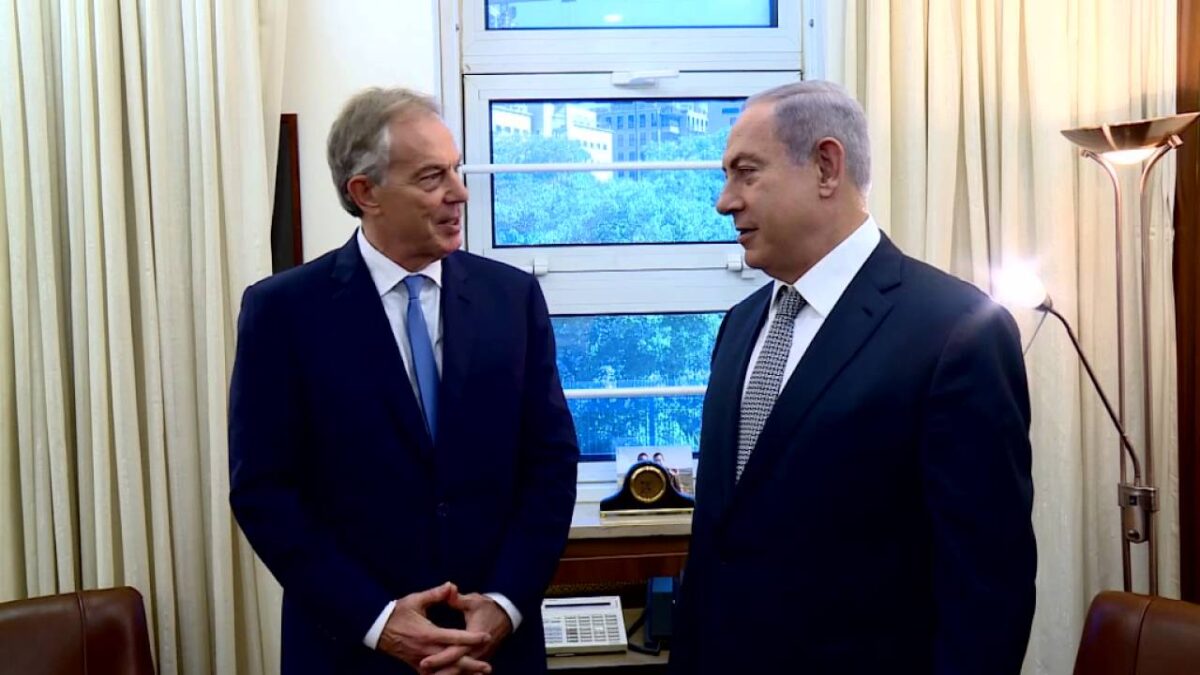
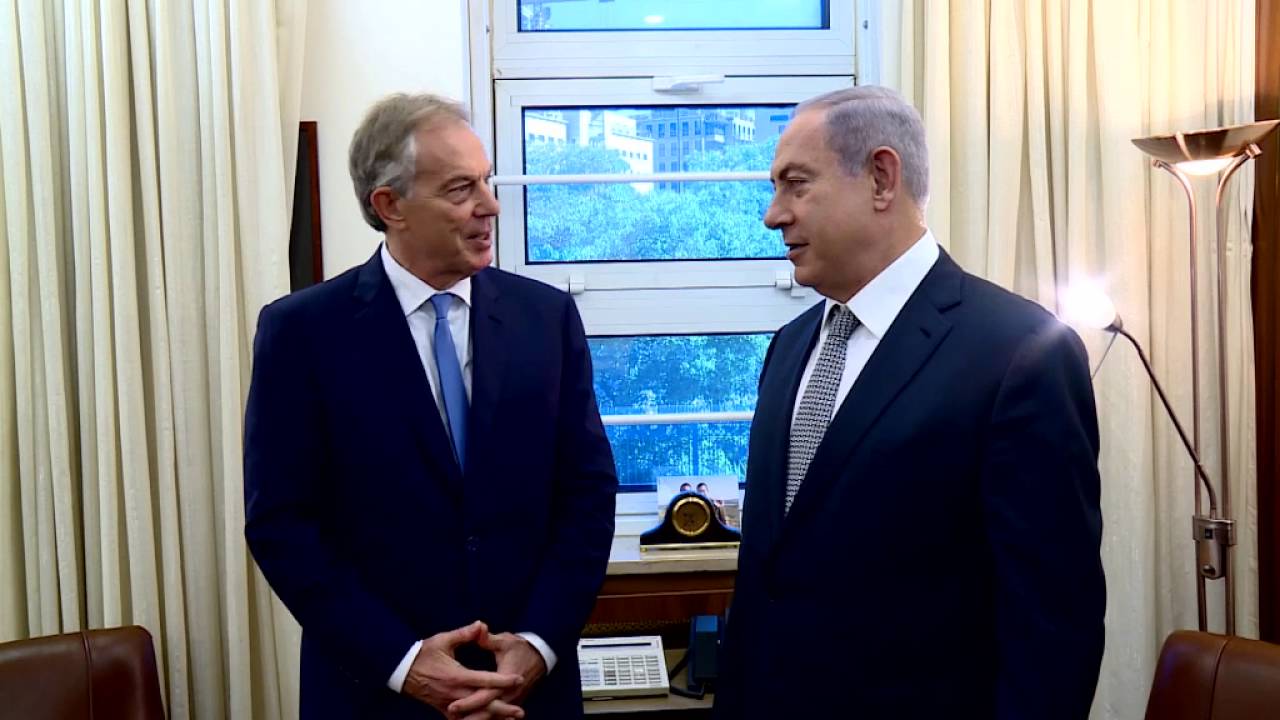
The Israeli Prime Minister Benjamin Netanyahu has objected to the participation of Turkey and Qatar in the board. A day after the White House announced the appointment of the Board of Peace (BOP), the office of Israeli Prime Minister said that the composition of the Gaza executive board was not decided in consultation with Israel.
The participation of Turkey and Qatar was not in line with Israeli policy Netanyahu’s office said. The PM asked his officials to take up the matter with US Secretary of State Marco Rubio.
Netanyahu had come under attack from his local political foes who were outraged to learn that Turkey and Qatar, that had, according to them, backed Hamas, would have a role on Trump’s “Board of Peace.” Israeli Finance Minister Bezalel Smotrich, a key figure in Netanyahu’s coalition, said that countries that “breathed life into Hamas cannot be the ones that replace it.”
Choice of Tony Blair
The choice of former British Prime Minister Tony Blair to be the functional head of the board (the chair is Trump himself) clearly indicated that Trump’s aim was to enhance US-Israeli hegemony over Gaza and the Middle East.
Blair filled the bill because he was an active accomplice in the US-led invasion of Iraq in 2003, which resulted in large-scale atrocities. Trump’s case was that Blair had spent years focusing on the Israeli-Palestinian issue as a representative of the “Middle East Quartet”, comprising the UN, EU, US and Russia.
Members of the BOP
Besides Trump and Blair, other members of the BOP included Jared Kushner, Trump’s son-in-law, US Secretary of State Marco Rubio, Steve Witkoff, Trump’s Middle-East negotiator, World Bank President Ajay Banga, billionaire US financier Marc Rowan, and Robert Gabriel, a loyal Trump aide who serves on the US National Security Council.
The board would also include senior figures from Egypt, Qatar, and the United Arab Emirates, which normalized ties with Israel in 2020. Trump also named to the board Sigrid Kaag, the UN humanitarian coordinator for Gaza, and the Turkish Foreign Minister Hakan Fidan.
The US is said to be aiming for roughly half a dozen more leaders to join the panel headed by Trump, including Saudi Arabia’s Crown Prince Mohammed bin Salman and Turkish President Recep Tayyip Erdogan.
In addition to the BOP, Trump also named a second “Executive Board” designed to have an advisory role.
The White House said that the BOP will take on issues such as “governance capacity-building, regional relations, reconstruction, investment attraction, large-scale funding and capital mobilization.”
International Stabilization Force
US Army Major General Jasper Jeffers will head the “International Stabilization Force” (ISF). Jeffers will be tasked to provide security in Gaza and train a new Gazan police force to succeed Hamas. Jeffers, who is from the special operations group in the US Central Command, was in charge of monitoring a ceasefire between Lebanon and Israel in 2024.
The US had been searching the world for countries to contribute to the security force, with Indonesia emerging as an early volunteer. But others who were approached were wary of firing on Hamas, which many see as a liberation force.
Blair’s Controversial Past
There is a chorus of objections from the world’s liberals against the appointment of former British Prime Minister Tony Blair as head of the board.
“Tony Blair should be on trial for war crimes, not running Gaza,” wrote Mehdi Hasan, editor of Zeteo on Saturday. “Putting Tony Blair in charge of any kind of peace effort in the Middle East is like making the arsonist the head fire-fighter; the burglar the chief detective. This is the man who allied with George W. Bush to illegally invade and occupy Iraq – a war that led to the deaths of hundreds of thousands of Arabs, ripped an entire Middle Eastern country apart, and unleashed extremism and terrorism across the region,” Hasan recalled.
“Blair was the Iraq war’s chief promoter outside of the US, enthusiastically peddling lies about weapons of mass destruction while cynically ignoring mass protests on the streets of the UK. He has never apologized for Iraq,” Hasan added.
As for Blair’s work in the international Middle East Quartet, Hasan quoted Western diplomats saying that he was “ineffective because he had no credibility in this part of the world.” Nevertheless, Blair’s bank balance also expanded according “Financial Times”.
The FT reported in 2015 that Blair’s “corporate roster had included PetroSaudi, an oil company with links to the Saudi royal family, JPMorgan and Mubadala, an Abu Dhabi wealth fund.”
Blair spent his time as Quartet envoy not just cashing checks from authoritarian regimes in the region, but pushing pro-Israel talking points. When it came to security, he was 100% on Israel’s side, Blair admitted in 2010. Senior Palestinian official Nabil Shaath said Blair “never proposed anything that the Israelis didn’t agree to.”
In 2025, “The Washington Post” noted Blair’s “warm” relations with Benjamin Netanyahu and quoted an Israeli official as saying: “The Israelis really like Tony Blair.”
Iraq War Spawned Al Qaeda
Alex MacDonald wrote in Middle East Eye (MEE) in 2023 that Al Qaeda rose as a result of the 2003 Iraq war. It caused illegal immigration in the UK.
The decision to go to war caused a significant rupture within Blair’s Labour party. Clare Short,international development secretary, Home Office Minister John Denham, Health Minister Lord Hunt and Foreign Secretary Robin Cook dramatically resigned.
War Tribunal on Iraq (WTI)
In 2003, a group of academics, campaigners and public intellectuals set up the World Tribunal on Iraq (WTI) – modelled on the people’s court set up by philosopher Bertrand Russell over the war in Vietnam – as a means of assessing the legality of the invasion. It found that Blair had “misrepresented intelligence” to build a case for war, and had “failed to exhaust all peaceful options” before resorting to military force.
WTI accused the US and UK of “using disproportionate force and indiscriminate weapon systems”; “imposing punishments without charge or trial, including collective punishment” and “redefining torture in violation of international law, to allow use of torture and illegal detentions”. The British Army gave top honour to a soldier who ‘karate chopped and kicked’ Iraqi detainees.
According to Iraqi intellectuals, Saddam’s regime was weak and insecure and would have gone eventually. Over time, the Iraqi people themselves would have thrown it out.
Peace Is a Far Cry in Gaza
With or without Blair, restoration of peace will face other obstacles. A fragile truce has largely held, but Israelis are occupying half of Gaza as a buffer zone, and have killed at least 450 people. Israel is yet to make good on its promise to reopen the Rafah crossing between Gaza and Egypt that could allow safe passage for Palestinian civilians and aid stockpiled on the Egyptian side of the border.
Another huge obstacle is Hamas’s refusal to lay down its arms, which means Israel refuses to commit to fully withdrawing from Gaza. Hamas has emerged from its tunnels weakened, but is still able to assert dominance in Gaza due to the absence of an alternative security force.
No country is willing to commit ground troops if it means battling Hamas. Privately, Arab States say they would prefer Israel doing the dirty job of finishing Hamas, according to “The Washington Post”.
The paper further said that rebuilding devastated Gaza will take decades and cost US$ 70 billion. Just removing the debris will take three years, the “Post” adds.
END
