

By P.K. Balachandran/Daily News
Colombo, January 6 – Despite losing some aircraft during the brief but intense India–Pakistan conflict in May 2025, India ultimately performed creditably, striking deep into Pakistan with missiles and drones while largely defending itself against Pakistani retaliation, according to Christopher Clary, Fellow at the Stimson Centre’s South Asia Program.
In his report, “Four Days in May: The India–Pakistan Crisis of 2025,” published on May 28, Clary argues that while Pakistan achieved early tactical successes, India regained the initiative and concluded the conflict from a position of military and strategic advantage.
Marked by Military Firsts
The crisis, which began on May 7 and ended on May 10, witnessed several significant military firsts for both countries.
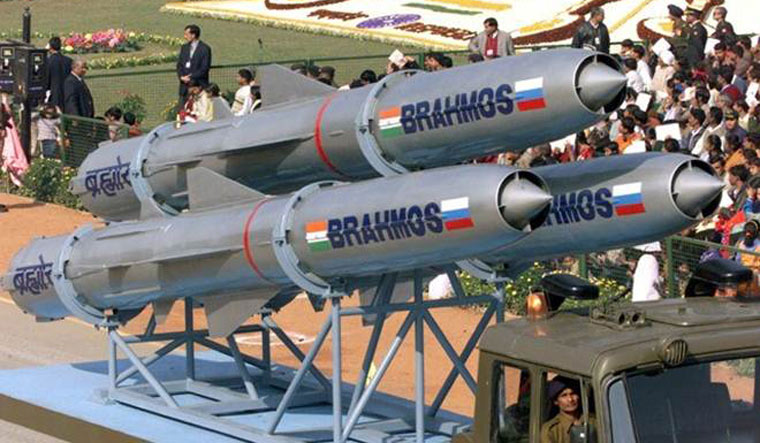
For the first time, India employed cruise missiles against Pakistan, including the BrahMos (co-developed with Russia) and the European SCALP-EG. Pakistan, in turn, used conventionally armed short-range ballistic missiles—the Fatah-I and Fatah-II—against India for the first time.
Most notably, the conflict marked the first instance of large-scale drone warfare between the two rivals. While drones had previously been used sporadically for reconnaissance and smuggling along the Line of Control (LoC), both sides now deployed drones in coordinated operations intended to cause physical damage.
Day One: Pakistan’s Early Counterair Success
On May 7, Pakistan achieved immediate success in a defensive counterair operation. Islamabad claimed it had shot down six Indian Air Force (IAF) aircraft. Independent evidence suggests that up to four Indian aircraft may indeed have been downed.
A Washington Post visual investigation identified three crash sites in India—two in Indian-administered Kashmir and one in Punjab—and identified two of the aircraft as a Rafale and a Mirage-2000. Reuters separately reported that three aircraft were downed in Kashmir, citing local government sources. Foreign officials told international media that at least one or two Indian aircraft were lost in the early hours of the conflict.
How Pakistan achieved this success remains unclear. International observers generally assess IAF pilots as highly skilled, and several of the aircraft involved were relatively modern. One explanation offered by Clary is that India deliberately avoided a broad campaign to suppress Pakistani air defences, focusing instead on militant-linked targets to demonstrate restraint and limit escalation.
This restraint, however, may have worked against India tactically. As Clary notes, political logic and military logic may have been at cross-purposes.
Missiles, Air Defences, and Competing Claims
Some observers attributed Pakistan’s early success to improved integration of ground-based radars and fighter aircraft, possibly enhanced by Chinese systems. Prior to the conflict, the Pakistan Air Force had highlighted its acquisition of Chinese PL-15 long-range air-to-air missiles, and debris recovered in India confirms their use.
At least one U.S. official told Reuters that Chinese-origin J-10 aircraft were involved in downing Indian jets, implying successful PL-15 engagements. The IAF denied that the PL-15s hit their targets, pointing to unexploded missile debris as evidence of misses.
Others suggested that Indian aircraft losses may have resulted from surface-to-air missiles, possibly the Chinese-origin HQ-9, or even from friendly fire, a persistent challenge in complex air operations.
Intense Fighting in Kashmir
Along the LoC in Kashmir, fighting was intense but geographically constrained. Small arms, mortars, artillery, and occasional tank and anti-tank missile fire were exchanged. Both sides refrained from attempting to seize territory or redraw the LoC.
More than 50 people were killed, many of them civilians, largely due to artillery and mortar fire. Ground forces fought primarily from hardened positions, supplemented by limited raids, keeping violence severe but contained.
Drone Duels: May 7–9
On the night of May 7–8, Pakistan launched drone and missile attacks against up to 15 locations across northern and western India. These attacks continued into the following night, apparently designed to saturate Indian air defences.
There is unequivocal evidence of Indian air defence units firing anti-aircraft guns and missiles in response. According to Indian officials, the attacks caused minimal damage, a claim supported by satellite imagery.
India retaliated on the morning of May 8 with drone strikes against Pakistani air defence radars and systems, framing its response as “non-escalatory” and of equivalent intensity. One air defence radar in Lahore was reportedly neutralized—an attack for which there is strong corroborating evidence.
India used a mix of Israeli-origin Harop and Harpy drones, along with British Banshee drones likely used as decoys. Pakistani sources acknowledged attacks on multiple sites and confirmed injuries to soldiers and partial equipment damage, lending credibility to Indian claims.
Renewed Attacks and Escalation Fears
The night of May 8–9 saw renewed Pakistani drone attacks on India, again with little observable impact. India responded with further drone strikes, reportedly destroying another Pakistani air defence radar.
Pakistan claimed it shot down dozens of Indian drones, though little contemporaneous evidence was provided.
Meanwhile, the international situation grew tense. On May 8, U.S. Vice President J.D. Vance publicly urged restraint, warning against escalation but stating that Washington would not intervene directly.
Alarming Intelligence and Missile Use
The U.S. assessment shifted on May 9 after receiving what officials described as “alarming intelligence.” That evening, Vance phoned Indian Prime Minister Narendra Modi, warning of a high probability of dramatic escalation.
It is likely that Washington observed Pakistani preparations to use short-range ballistic missiles, which were subsequently launched on the night of May 9–10. The U.S. also tracked indicators of Pakistani nuclear readiness, raising serious concerns.
Pakistan’s military spokesperson declined calls for de-escalation, stating that India would “get an answer in our own timing,” further heightening tensions.
The Climax: India’s Deep Strikes (May 9–10)
The night of May 9–10 marked the conflict’s climax. India conducted a coordinated, large-scale standoff strike against key Pakistani military targets.
Shortly after midnight, India reportedly intercepted a Pakistani missile near Sirsa. By around 2:30 a.m. Pakistan time, India struck the Nur Khan airbase near Rawalpindi, with explosions audible in Islamabad.
According to the IAF, this was a calibrated operation designed to “convey a message” after relentless Pakistani drone attacks. Multiple airbases—including Rafiqui, Rahim Yar Khan, Sukkur, Sarghoda, Bholari, and Jacobabad—were hit, along with command, control, radar, and drone facilities.
Commercial satellite imagery confirms damage at most of the targeted sites, including runway cratering and strikes on hangars.
Nuclear Threshold Avoided
Rumours that India struck a nuclear storage site at Kirana Hills were not supported by evidence. The IAF denied targeting nuclear facilities. While Nur Khan airbase is located near Pakistan’s Strategic Plans Division headquarters, the offices themselves were not hit.
Clary concludes that India demonstrated awareness of escalation risks, signalling resolve without crossing the nuclear threshold.
Assessing the Outcome
By May 10, India’s performance had improved markedly. Using a combination of decoy drones, anti-radiation systems, cruise missiles, and precision rockets, India largely overcame Pakistani air defences.
Pakistani claims of severe damage to Indian bases, including destruction of an S-400 system, lack supporting evidence. Indian officials acknowledged only limited damage at four locations. Pakistani ballistic missiles failed to produce observable effects, suggesting interception or misses.
Clary attributes India’s asymmetric success to improved air and missile defence, including lessons learned from recent conflicts in Ukraine and the Caucasus, and the integration of kinetic and non-kinetic counter-drone systems.
Diplomacy and Ceasefire
U.S. Secretary of State Marco Rubio played a key diplomatic role in the final hours, offering Pakistan assistance in launching constructive talks. Following calls with Pakistan’s army chief and foreign minister, Islamabad signalled willingness to cease hostilities if India did the same.
India agreed, and the conflict ended shortly thereafter.
India stumbled early in the conflict but recovered decisively. Its deep strikes on May 9–10 demonstrated operational sophistication, escalation control, and defensive resilience. Pakistan’s early tactical gains did not translate into sustained success.
As Clary concludes, India emerged from the four-day crisis having performed creditably by any measure, ending the conflict on favourable military and strategic terms.
END
