

By Tang Lu
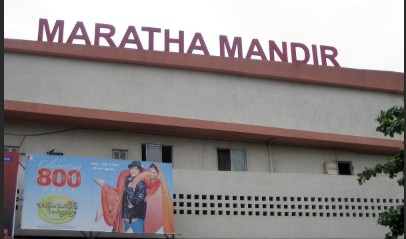
October 20, 2025, outside Maratha Mandir, an iconic single-screen theatre in Mumbai, the aroma of popcorn mingled with the melody of Dilwale Dulhaniya Le Jayenge’s song “Mehndi Lagaa Ke Rakhnaa. Early in the morning, hundreds of moviegoers from across the country lined up to buy tickets. This wasn’t a new release premiere, but the 30th anniversary of the continuous screening of the Bollywood romantic classic Dilwale Dulhania Le Jayenge(The Brave-Hearted Will Take the Bride), commonly referred to as DDLJ.
Since October 20, 1995, the film has been screening at Maratha Mandir, accumulating over 1,500 weeks—setting the world record for the longest continuous run of any movie.
The theater ‘s executive director Manoj Desai said, “We thought DDLJ would run for a few years, but this cinematic legend has become the soul of our theater.”
The day’s celebration felt like a collective reunion after years apart. Fans gathered at the ticket office and posters displays, posing for photos with DDLJ ticket stubs, curled posters, and even well-preserved VHS tapes and photo albums collected over the years.
Some held their first ticket from thirty years ago against the newest one purchased that day, comparing them in their palms. Others laid out stickers and pins collected over the years, as if bearing witness to a shared chapter of life.
Redefined Romance and Forged the “Romantic Hero”
India in the 1990s was just entering an era of liberalization, marked by intense clashes between old and new traditional values. DDLJ emerged at this pivotal moment, redefining romance for an entire generation.
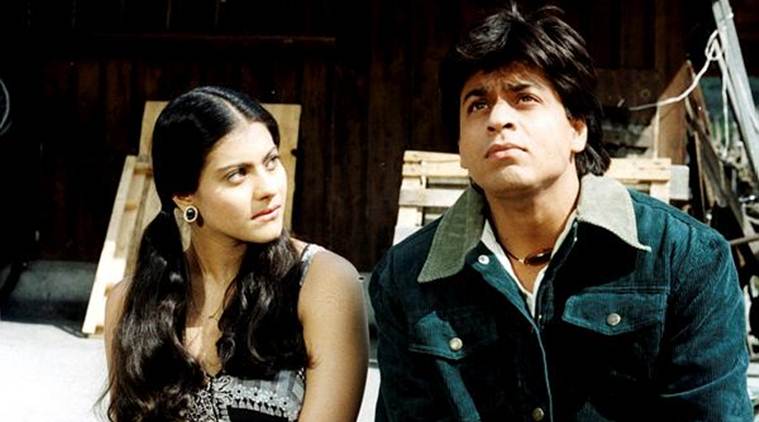
Set between London and India’s Punjab region, it tells the story of Raj (played by Shah Rukh Khan) and Simran (played by Kajol), two British-raised Indians who meet and fall in love during a European trip. However, upon returning home, Simran is arranged to be engaged by her father Baldev, a rigid patriarch.
Raj pursues her to rural Punjab, but upon seeing her, vows, “I won’t elope with Simran until her father gives his consent.”
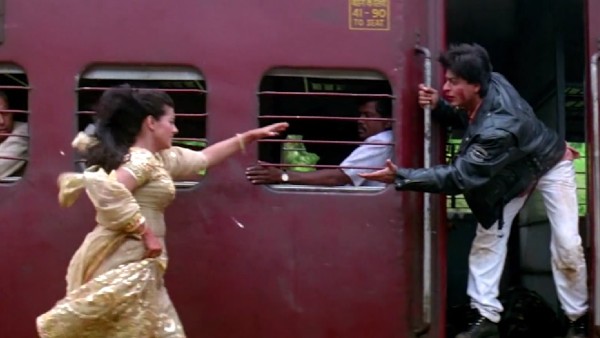
The climax unfolds at the train station. As the wheels begin to roll, Simran pleads with Baldev to let her leave with Raj. Baldev finally relents, saying, “Go, my child!” Simran runs, Raj reaches out, and at the last moment, she leaps onto the train.
Overnight, with the release of DDLJ, Shah Rukh Khan not only cemented his status as Bollywood’s premier “romantic hero” through his portrayal of Raj, but also defined a generation’s ideal of a passionate yet tradition-respecting lover.
Thus, DDLJ shifted the gears of Bollywood’s romantic narrative: previous romances often swung between extremes—either elopement and rupture, or tragic endings. DDLJ introduced a new paradigm—finding balance between love and family responsibility, tradition and modern values.
Raj’s stance of “pursuing love with parental approval” became the archetype for happy-ending narratives. Parents aspired to have sons like Raj, while girls yearned for partners like him.
Simran’s courage to pursue her dreams despite conservative family constraints also resonated deeply with female audiences.
Before the shooting of DDLJ, there was another episode. Director Aditya Chopra recalled in 2023 documentary TV series “The Romantics “ showed on Netflix. Before DDLJ, Shah Rukh Khan—not yet a national icon—yearned for fame but initially rejected the film. He refused to be confined to the “romantic hero” mould, instead seeking to establish himself through action roles. Chopra’s repeated persuasion failed until he uttered what would become an industry adage: “Don’t shut yourself out of romantic stories. In this country, you can only become a superstar when you’re seen as every mother’s son, every sister’s brother, and every college girl’s fantasy.“
The words unlocked the door. Shah Rukh Khan ultimately accepted the role, cementing his on-screen persona as ”Raj”—charming, yet measured, bold in love yet dignified.
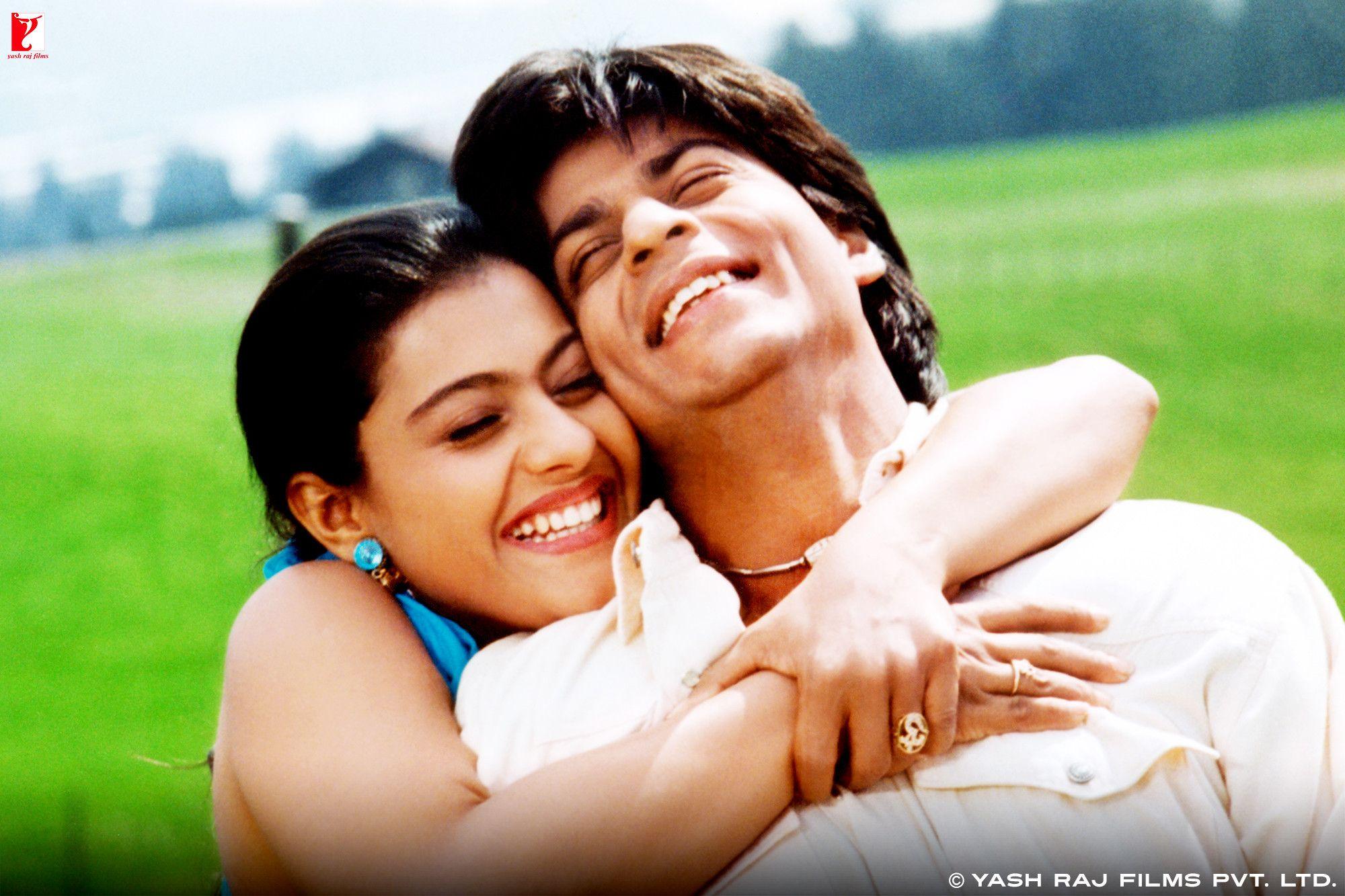
From that moment on, Shah Rukh Khan (SRK) became synonymous with the “romantic leading man” in Hindi cinema, a status that has endured for decades. His on-screen partnership with Kajol has been crowned “the most beloved screen couple” through countless replays.
DDLJ Forged a “Pilgrimage Site”
“I’ve watched it about thirty times, and I’ll keep watching.” For many Indians, DDLJ is not just a movie—it’s an emotion, a ritual, a touchstone for an entire generation.
Thirty years later, Raj and Simran remain alive in the hearts of this generation—their laughter, their rebellion, and the conviction that propelled them onto the train embody all Indians yearn for in love: passion, courage, and a touch of fate. For this reason, over three decades, DDLJ has transformed the Maratha Mandir into a “pilgrimage site” for its devotees.
This single-screen cinema, opened in 1952, may lack the hardware of Mumbai’s luxurious multiplexes, but its prime location near Central Station gives it unique appeal. Many travelers arrive by train or bus, spending just a few dozen rupees to watch DDLJ before rushing back to their schedules.
Manoj Desai explains that low ticket prices from Rs.30–Rs.50 and the fixed 11:30 AM daily screening have cultivated a loyal audience. Weekdays draw mainly college students and young couples, while weekends often see full houses.
“Some bring their children to show them films their parents watched in college. Others bring their parents to revisit the movies they first saw together.”
On anniversaries or for fan club events, the theater is often fully booked. Tour groups from other cities and overseas also make advance reservations, listing “watching DDLJ at Maratha Mandir” as a pilgrimage-like stop on their itineraries.
Maratha Mandir’s Milestones
Maratha Mandir has marked several significant milestones: celebrating the 500th and 1000th weeks of DDLJ screenings in May 2005 and December 2014, respectively.
In February 2015, during the film’s 1009th week, a notice reading “This is DDLJ’s final week” was briefly posted at the entrance due to financial pressures from declining revenue. News spread, and fans flooded the theater with calls: “Who gave you permission to do this? How dare you take this film off?”
Desai recalls receiving two to three hundred protest calls over several days. The management quickly reversed the decision, and DDLJ returned to the screen. Even when screenings paused during the 2020 pandemic, they resumed after just four months.
“After that,” Desai said, “we just kept running and running.”
For Maratha Mandir, screening DDLJ had long transcended mere box office earnings. It had become something elevated to a “higher plane”—a ritual of punctual screenings that steadied a city’s rendezvous with love.
My DDLJ “Pilgrimage” Experience
As a foreigner who loves Indian cinema, I wasn’t a die-hard fan of DDLJ, yet I unexpectedly formed a connection with it. The year the film premiered, I was studying in New Delhi. Watching it with my Indian classmates, I witnessed firsthand the cultural wave DDLJ unleashed. Posters and melodies flooded every corner—campuses, buses, trains, street-side shops—all bearing the images of Raj and Simran, and soon I found myself humming a few of the film’s songs.
Returning to India in 2005, I noted that a decade later, DDLJ remained a staple on internet cafes and radio stations.
In 2015, while working in Mumbai, I observed Indians’ passion for cinema up close. After thorough research, I finally stepped into the Maratha Mandir on a sunny morning to experience a sense of “pilgrimage.” Outside the cinema, a massive poster celebrating DDLJ’s 1000th week of screening was clearly visible. Perhaps because the showtime was fixed at 11:30 AM, the dedicated DDLJ ticket box didn’t list specific showtimes. It simply displayed balcony seats priced at 25 rupees each (at a time when tickets for other films at the cinema were over 100 rupees).
The Maratha Mandir screening room resembled a meticulously preserved “time capsule”: slightly weathered walls, faded velvet seats, high ceilings, and humming ceiling fans. As the lights dimmed and the prelude began, the audience rose as if by unspoken agreement: whistles, singing along, applause, then settling back into seats—a collective ritual sustained for two decades, and extended for another ten.
A fellow viewer beside me remarked, “I come almost every week.” The fan’s rhythm punctuated his words.
Impact Extending Beyond the Screen
If Maratha Mandir embedded this film into the city’s daily fabric, DDLJ’s influence has long transcended the silver screen, bringing fresh air and historic breakthroughs to India:
Musical Reinvention- DDLJ’s soundtrack is hailed as a reinvention of 1990s Bollywood music, blending catchy, melodic tunes. Many songs have been widely covered and remixed, becoming integral to Indian pop culture.
Fashion Revolution – DDLJ set trends through the protagonists’ attire—rooted in Indian values yet infused with Western casual style. Simran’s green sari, shawl, and maxi dress, alongside Raj’s leather jacket, jeans, and baseball cap, became style benchmarks for youth.
Film Paradigm – The “train chase” scene became a romantic icon for Bollywood, with countless films emulating this sequence to express love; Whether heterosexual or homosexual narratives, train scenes consistently anchor emotional climaxes.
Swiss Tourism – DDLJ pioneered Bollywood’s practice of promoting global destinations through location filming. With multiple scenes shot in Switzerland, the film transformed the country into a dream destination for every Indian. As lakes, grassy slopes, snow, and trains unfolded before audiences, travel agencies swiftly packaged “DDLJ filming locations” into tour itineraries. Since then, the Indian film industry has mastered the production approach of “filming abroad while telling domestic stories.”
Simultaneously, the identity and daily lives of “Indians abroad” moved from the margins into the mainstream narrative, becoming a subject group Bollywood actively embraced.
Charm That Transcends Generations
DDLJ’s three decades have sharpened its critical reception. Some say that the patriarchal supremacy that DDLJ preaches in movies has not changed for 30 years; There are also women who say that times and the economy have undoubtedly changed for women.
However, the limiting factors that restrain Simran’s vision remain the same. Gen Z doesn’t hold DDLJ up as the definitive answer to love. Some find its pace too slow and restrained, others point out that “submissiveness is romanticized and gender roles are overly defined,” and some even state bluntly, “I wouldn’t watch a single minute of it.”
Theater director Desai observes that DDLJ’s appeal transcends generations, with new audiences—including many Gen Z viewers—continuing to flock to Maratha Mandir to experience this legendary love story.
“Precisely DDLJ isn’t a love story Gen Z can immediately grasp,” Desai explains. “We often see young people bringing more friends to watch it, all trying to understand why it resonates. This cycle continues, and now Raj has become utterly charming to them, while Simran has grown endearing.”
On the other side of the screen, the actors who portrayed DDLJ’s leads also shared reflections on its 30th anniversary. Shah Rukh Khan remarked, “It’s hard to believe it’s been 30 years. Countless couples have told me they fell in love and married because of this film. It has had a joyful impact on Indian and South Asian pop culture.”
Kajol’s words felt like a footnote – Over three decades, DDLJ “has become more than just a film—it’s a mirror reflecting the evolution of Indian love stories. Those 16-year-olds who once dreamed of love through Raj and Simran’s tale are now parents, sharing love stories with the next generation.”
She added, “DDLJ has become the template for romantic dreams in Indian cinema.”
Back at Maratha Mandir, the moment that the notice board about the removal of the film was taken down., it ceased to be merely a cinema. It became more like a device that calibrates the emotional clock daily.
As for “how long the screenings will continue,” the answer is straightforward: as long as Maratha Mandir stands, the films will keep playing. As Indian film critic and writer Baradwaj Rangan observes, for a nation still navigating between traditional and modern values, DDLJ’s appeal will endure.
“I think it will play forever.” he said.
END
(Tang Lu has served in India, Sri Lanka and Maldives as a journalist for many years)
.
